West Asia Conflict: Surprisingly Low Airpower Losses — Or Just the Visible Tip?

By Jacob K Philip

How many military aircraft/remotely controlled aircraft/drones have both sides lost in the West Asia war so far?

While it is true that the first casualty in a war is truth and facts, there are still some figures that can be confirmed as of April 2, a month and three days after the war began.

If we sift through all the information spread by both sides’ news channels, newspapers, and especially social media, it can be seen that the reliable numbers are, five aircraft and 60 remotely controlled aircraft/drones.

.
Aircraft:

1. A US Air Force Boeing KC-135 Stratotanker aircraft.
-Crash on March 12 while flying over western Iraq
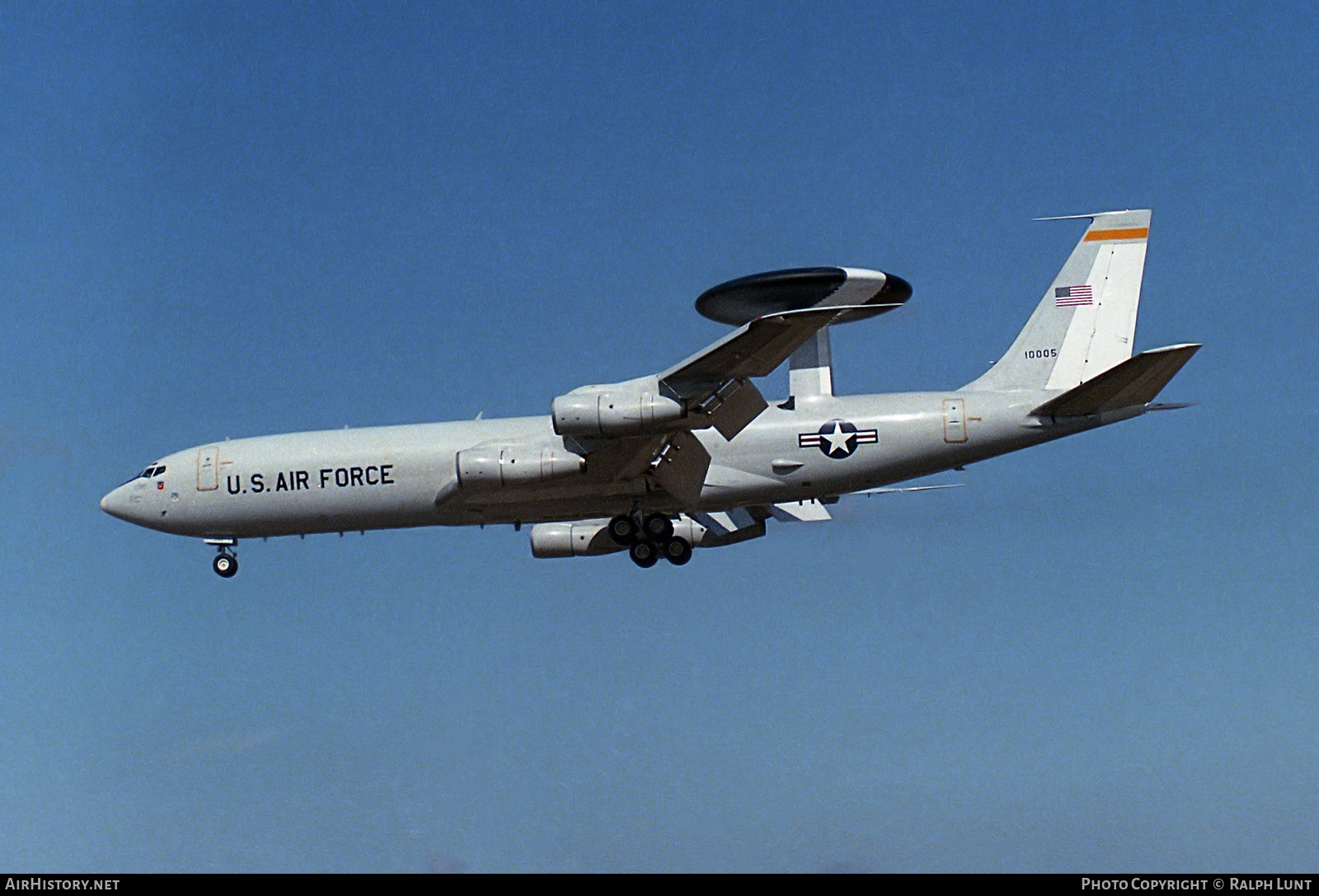
2. A US Air Force Boeing E-3 Sentry AWACS aircraft (registration 81-0005).
-Destroyed by an Iranian missile on March 27 while parked at Prince Sultan Air Base in Al Kharj, Saudi Arabia.
3. Three US Air Force F-15E Strike Eagle fighter jets were accidentally shot down by the Kuwaiti Air Force near Al Jahra, Kuwait, on March 1.

Total 5.

Drones, Remotely Controlled Aircraft:
1. US MQ-9 Reapers – 12
Shot down and damaged during the attack.
2. US MQ-9 UAVs – 5
3. US MQ-4C Triton – 1
This Northrop Grumman MQ-4C remotely piloted-reconnaissance aircraft, registration 169660, has not flown since it made a distress call and landed at Al Dhafra Air Base in Abu Dhabi on February 22.
4. Iranian attack drones (such as the Shaheed) – 40
This is not a complete count. This is because many drones are launched together and many drone interceptions go unrecorded.
5. Israeli Hermes and Heron UAVs – 2
This is also not a complete count. This is because very little information is publicly available about most of Israel’s drones.

A total of 60.

Although the total loss of aircraft and drones has so far been confirmed to be 65, it is widely reported that seven US fighter jets, four AWACS aircraft, three tankers, four transport aircraft and 20 UAVs (such as the MQ-4C Triton) have been destroyed.

These are reasons why these claims cannot be confirmed –

1. No debris from the crashed aircraft have been found anywhere
2. There are no satellite images of the aircraft that are said to have destroyed while parked at airbases.
3. There were no known search and rescue operations after the aircraft went down.
3. There are also no reports of capture of the crew of the aircraft that are claimed to have been shot down, alive or dead.

The mere fact that the aircraft has not been seen on tracking sites does not prove that the aircraft has crashed. During war, such aircraft may fly completely invisible—with their transponders turned off.

There are two reasons why Iran’s losses are not complete.
The first is that Iran has only fielded a few aircraft, just because they have very few fighter planes. And in the present theatre of war, Iranian aircraft do not penetrate and attack enemy areas. Their primary weapons are all missiles and drones. As mentioned earlier, since many drones are launched at once, the number of losses can often be inaccurate.

The reason why Israel’s aircraft losses are not counted is because of the very strict censorship that exists there. Moreover, the fact that the frontline fighters in this war are the United States, is also minimizing and hiding Israel’s air losses.

  • Jacob K Philip is the Editor of Aviation India/Indian Aviation News Net. He can be reached at jacob@indianaviationnews.net
Share this:
Share this page via Email Share this page via Stumble Upon Share this page via Digg this Share this page via Facebook Share this page via Twitter

Who Started the 2026 Iran War? What Tanker Planes Reveal

By Jacob K Philip

The movements of US Air Force planes in January and February suggest that the United States had not decided when to go to war—or maybe even whether to go to war—with Iran until the day before the attack, and that it was Israel that unilaterally launched the attack on February 28.

It is the Boeing KC-135R Stratotanker aircraft, which refuel fighter jets mid-air, that returned to the United States in two batches in January and February from the US military base at Al Udeid, Qatar, that provide this insight into how the war began.

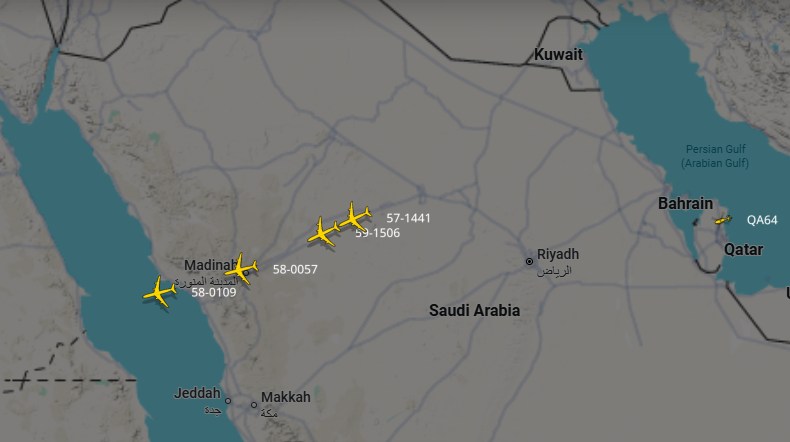
Tankers returning to the US from Al Udeid base, Qatar, on January 24.

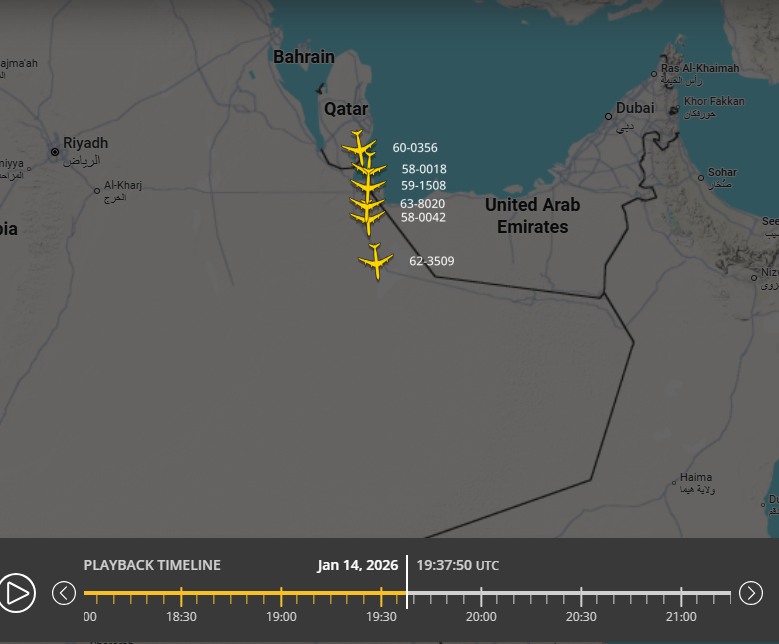
Flight-tracking sites show that four tankers with registration numbers 58-0109, 58-0057, 59-1506 and 57-1441 flew back to various US bases from the Al Udeid military base in Qatar on January 24, and five tankers with registration numbers 60-0356, 58-0018, 58-0042, 59-1508 and 63-8020 returned on February 10.


The tankers that appeared to be moving out of Al Udeid US base in Qatar on Janury 14. Of these five tankers returned to US during February 9, shows Flightradar24. 

Note the dates January 24 and February 10.

As the threat of war grew stronger by the day, Trump said on January 23 that he hoped military action would not be necessary against Iran.

The first batch of tankers returned to the US the next day.

The UAE, Saudi Arabia, Qatar, Egypt, Jordan, Turkey, Indonesia and Pakistan jointly called on February 9 for the conflict not to escalate and for war to be avoided.

The next day, February 10, five more tankers returned to the United States.

It is clear that, because the United States had not decided conclusively in favour of war despite the increasing tension in West Asia, the fuel tankers—indispensable for air warfare—were sent back to their home bases 11,000 kilometres away.

Although things were becoming more complicated even as the second batch of tanker planes were flying back to the United States, there was still no sign that the United States had reached a final decision to go to war.

The mediator, Oman, was also saying that things were progressing smoothly.

While rapid military moves continued, by February 16 Trump had said that the US would retaliate if Iran attacked. But the second round of Iran-US talks in Geneva on the 17th ended with a decision to prepare guidelines for further talks.

The third round of talks was held on the 26th in Switzerland at the residence of the Omani ambassador to the UN. After the talks, Iran announced that it would not stockpile enriched uranium and would allow IAEA inspections. Later, the Omani foreign minister said that good news might be available soon.

The next day, on February 27, although Trump said he was not happy with the position taken by Iran in the talks and that military action remained an option, he stopped short of saying that a final decision on war had been made.

However, 24 hours later, on February 28, Iran was attacked without warning.

Some believe the US was preparing for the February 28 attack while creating the impression that it was not, by hiding most of its war preparations and by participating in the nuclear talks.

That was quite possible, given the history of deception and wartime tactics associated with both Israel and the United States.

However, the trajectory of the tankers in question during these days paints a different picture.

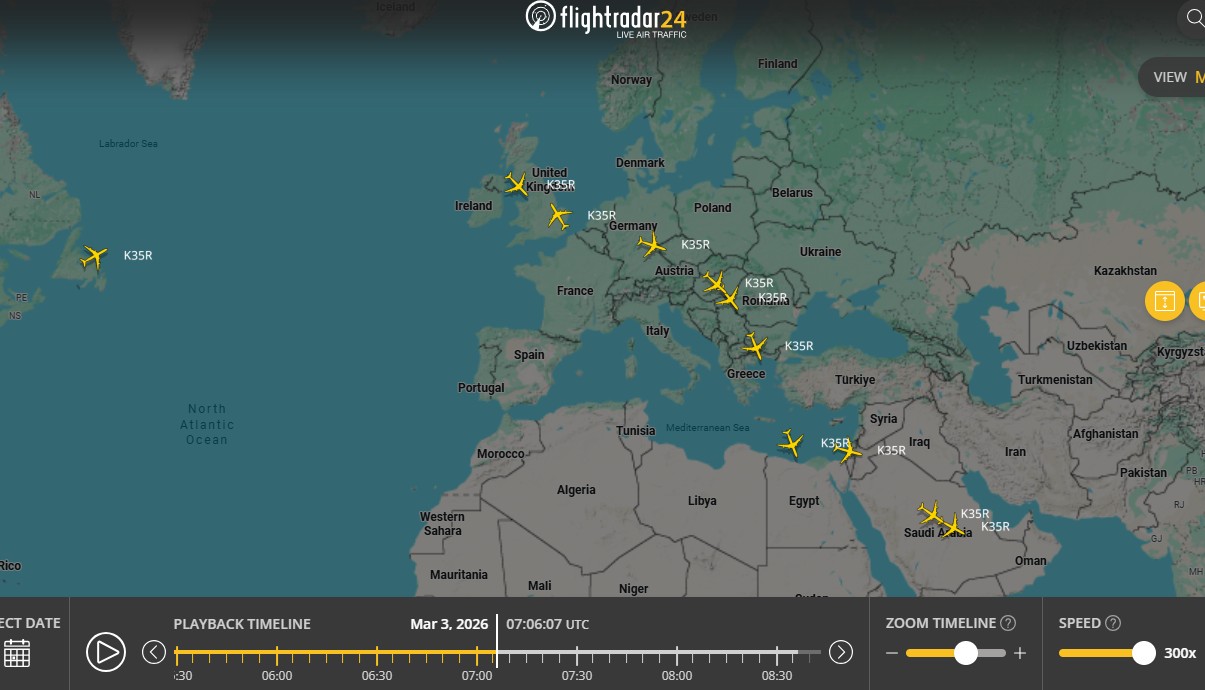
After the en masse return of tanker planes to the US on January 24 and February 10, they appeared to be returning to West Asia only hours after the war began, that is, during early morning of February 29.

The return of tanker convoys continued until March 3.

Tanker planes coming back to West Asia early morning of February 29.
Tanker planes returning to West Asia on March 3.

If the intention had been to mislead Iran into believing there would be no war, there would have been no need for the tankers to fly all the way back to the US. After flying out of the Middle East with their transponders on, they could simply have returned to US bases in the Gulf in invisible mode (after turning off their transponders).

Remember that these planes never returned to West Asia before the war, even though the talks mediated by Oman, which lasted until February 27, were oscillating between failure and success.

The fact that the return flights began only hours after the attack indicates that the war that started on the morning of February 28 was unexpected for the United States.

There is another reason to believe that Israel pushed the hesitant United States into the war by carrying out the first attack, which killed Iran’s Supreme Leader, Ayatollah Ali Khamenei.

Eliminating the leadership of the attacked country at the very beginning of a war is considered a distinctive Israeli strategy.

And the F-35I Adir, a stealth fighter jet that many defence experts believe was used in the attack, is operated not by the United States but by Israel.

This aircraft is capable of conducting long-range attack missions without the need for in-flight refuelling. If refuelling was needed at all, Israel had Boeing 707 Re’em tankers. In other words, they did not have to rely on American Stratotankers.

Two hours after the first attack that killed Khamenei and other leaders, the Minab school attack—which killed 180 people, mostly girls—took place, marking the entry of the United States into the war that had been started by Israel.

  • Jacob K Philip is a Kochi based aviation analyst and honorary editor of Aviation India. He can be reached at jacob@indianaviationnews.net
Share this:
Share this page via Email Share this page via Stumble Upon Share this page via Digg this Share this page via Facebook Share this page via Twitter