Man on the Runway, an Aborted Takeoff and an Engine Fire: A horror unsaid at Denver?

By Jacob K Philip

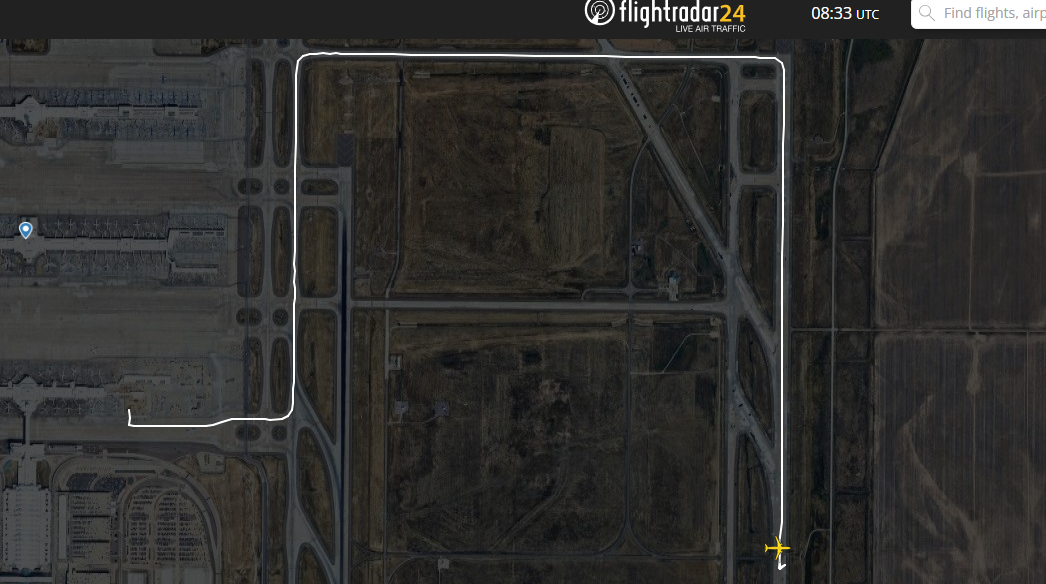
A Frontier Airlines plane en route from Denver, Colorado, to Los Angeles, California, struck a pedestrian on the runway at Denver International Airport Friday night, forcing the aircraft to suddenly abort takeoff, triggering a small fire and the evacuation of passengers.

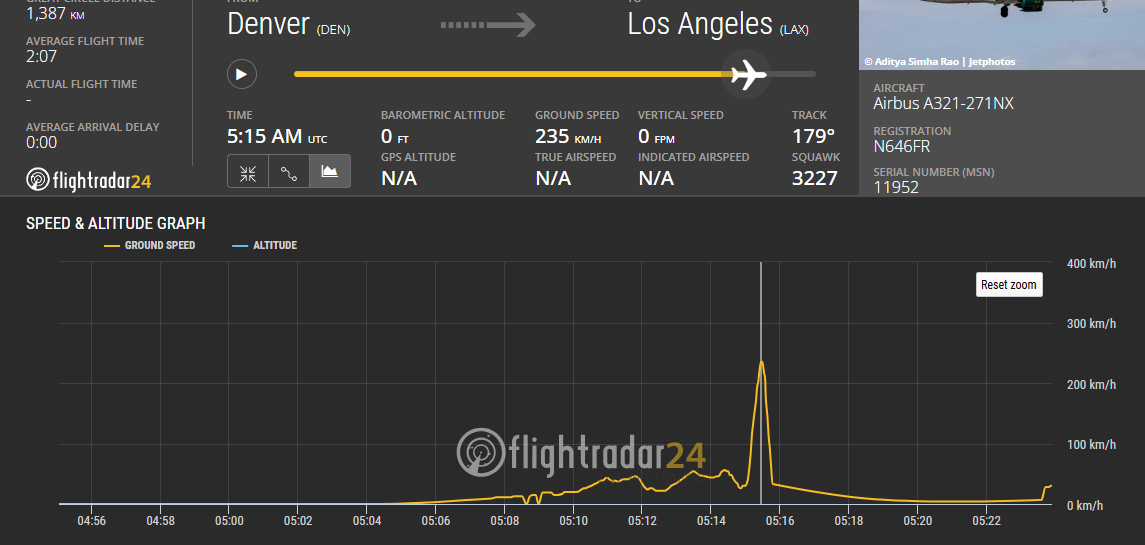
The Airbus A321-271NX, an A321neo with registration N646FR, was departing from Runway 35R at 11:15 p.m. when it reportedly struck a ‘pedestrian’ crossing the runway about 30 seconds after beginning its takeoff roll.

During the takeoff run, the A321neo was approaching its decision speed — commonly known as V1 — the maximum speed at which a takeoff can still be safely aborted. The aircraft was traveling at around 235 km/h when the crew initiated a rejected takeoff.

After realizing the aircraft may have struck someone, the pilots immediately applied maximum braking and reverse thrust to stop the plane. At the time, the aircraft had 231 passengers and crew on board and was carrying about 9,525 kilograms of fuel for the 1,387-kilometer flight to Los Angeles.

The aircraft, weighing roughly 80 tonnes including passengers, fuel, and cargo, came to a sudden stop at high speed. Under such circumstances, enormous friction builds up in the braking system, often generating enough heat to cause smoke or even tire and brake fires.

However, airport authorities and several news reports specifically stated that the fire occurred in one of the aircraft’s engines and was later extinguished.

That unusual detail raises further questions about the accident and highlights gaps in the information released so far.

How did the person reportedly struck by the aircraft gain access to the active runway area inside a major international airport? How could someone cross a runway while an aircraft was accelerating for takeoff?

Who exactly was the “pedestrian” mentioned in the reports — the individual whom the pilot reportedly told air traffic control he had seen walking across the runway?

Was the person an airport employee, a passenger, a maintenance worker, or a trespasser? So far, none of the reports have clarified this.

Now, let us return to the reported engine fire.

As noted earlier, when a large aircraft aborts takeoff at high speed, it is not unusual for the landing gear, brakes, or tires to overheat and even catch fire.

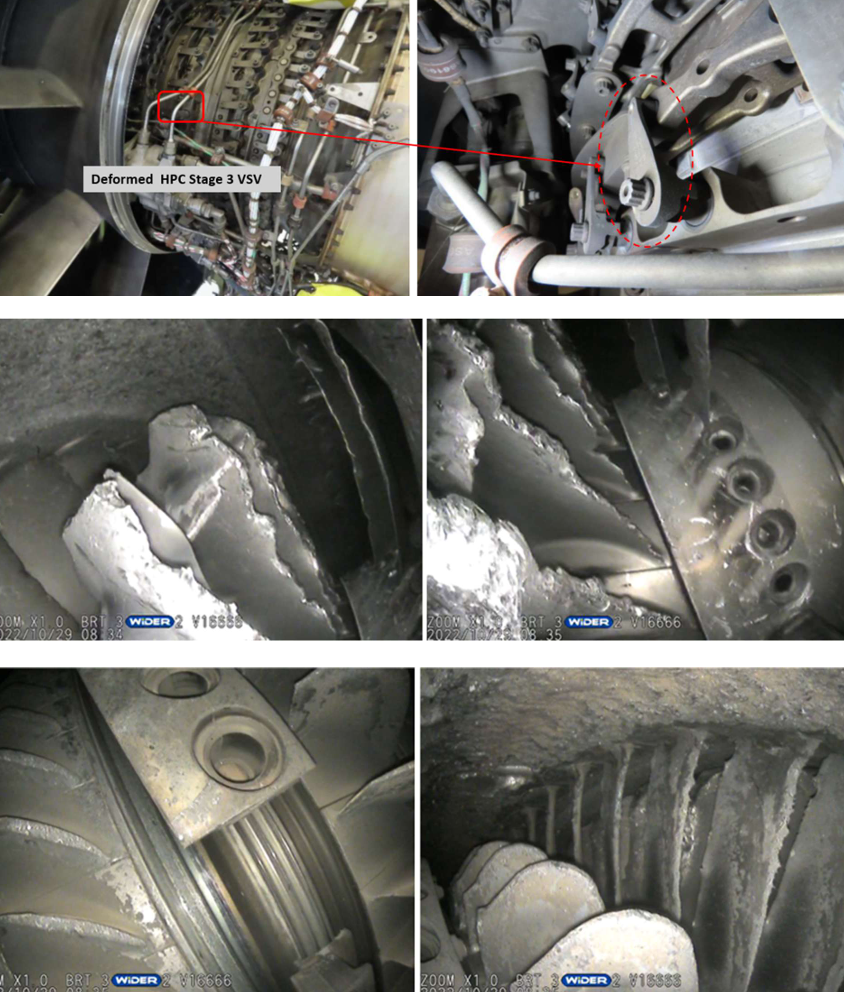
But an engine fire points toward another possible scenario — that foreign objects may have entered the engine during the incident. Such an event can disrupt airflow inside the engine and trigger a compressor stall or engine surge, often accompanied by loud bangs, smoke, sparks, and, in some cases, fire.

That raises another disturbing question: what exactly entered the engine?

It is worth noting that, apart from the pilot reportedly saying he saw someone on the runway and believed the aircraft had struck the person, there has been little mention in news reports about the individual’s condition or what ultimately happened to him.

Another important factor is the height of the Airbus A321neo’s engines above the ground. Depending on aircraft weight and tire pressure, the Pratt & Whitney PW1100G or CFM LEAP-1A engines fitted on the A321neo sit only about 80 to 120 centimeters above ground level. The engine fan diameter itself is approximately 198 to 206 centimeters.

And the average adult human height ranges between 167 and 182 centimeters.

During takeoff, the engines of an A321neo ingest 500-700 kilograms of air every second. That means, the aircraft’s two engines pull in air at a rate 10,000 times more powerful than a typical household vacuum cleaner.

Given those forces, and with the aircraft moving at 235 km/h during the rejected takeoff, one cannot help but imagine — with horror — what might happen to a person caught in front of the engines.

  • jacob@indianaviationnews.net
Share this:
Share this page via Email Share this page via Stumble Upon Share this page via Digg this Share this page via Facebook Share this page via Twitter

Two Aviation Disasters, One Dark Question Hanging Over

By Jacob K Philip

Eleven months after an Air India Boeing 787 crashed seconds after takeoff from Ahmedabad while operating a flight to London, attention has now turned to a similar tragedy in China four years ago — after a newly released US report suggested that the crash may have been deliberate.

A document released by the US National Transportation Safety Board (NTSB) says the fatal crash of a China Eastern Airlines Boeing 737-800 in March 2022 could have been caused by the deliberate shutdown of both engines in flight.

The aircraft had taken off from Kunming Changshui International Airport at 2:23 pm on March 21, 2022, bound for Guangzhou Baiyun International Airport. All 132 people on board were killed.

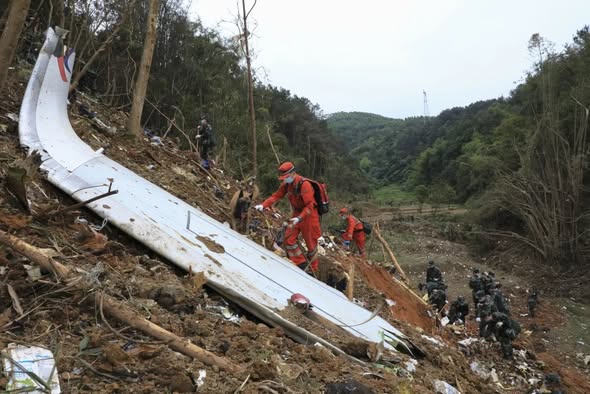
Search and rescue team at China Eastern Airlines crash site.

The NTSB document, released under the US Freedom of Information Act, has intensified global debate because of its striking similarities to revelations contained in the preliminary report into the recent Air India crash.

The US agency participated in the China Eastern investigation because the aircraft was US-made. According to the report, data extracted from the aircraft’s black boxes showed that both engine fuel control switches had been moved from RUN to CUTOFF while the aircraft was cruising at 29,100 feet.

“The only explanation” for the switches being moved, the NTSB noted, was that someone intentionally changed their position, as there had been no indication of any mechanical or system malfunction before the event.

Roughly an hour after departure, the aircraft suddenly entered a steep descent. In just over two minutes, it plunged from 29,100 feet to 9,075 feet before disappearing from radar near Wuzhou in southern China.

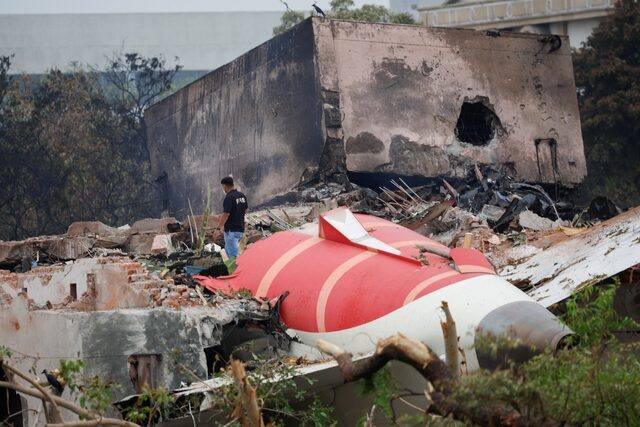
Air India crash debris

Air traffic controllers repeatedly attempted to contact the cockpit during the descent, but there was no response.

Investigators noted that the switches were never returned to the RUN position, strengthening suspicions that the act may have been intentional.

The report also casts doubt on suggestions that the aircraft simply became uncontrollable after engine failure. Aviation experts point out that even with total loss of thrust at cruising altitude, the aircraft should have been capable of gliding forward for a considerable distance and potentially making an emergency landing.

The NTSB further revealed that the flight data recorder stopped functioning as the aircraft descended through 26,000 feet after electrical power was lost. However, the cockpit voice recorder continued operating on battery power until impact.

According to the report, the cockpit voice recorder suffered catastrophic damage in the crash, and no backup copy of the audio had been created. China has also not handed the original recording to US investigators.

Investigators believe it is unlikely that the pilots intentionally shut down both engines and then immediately forced the aircraft into a near-vertical dive. One theory under consideration is that a third person may have entered the cockpit and incapacitated the crew.

The report notes that if one pilot had deliberately cut off the engines, the other would almost certainly have attempted to restart them. The absence of any restart attempt has therefore become a key focus of the investigation.

The renewed attention on the China Eastern crash comes as controversy continues over the preliminary findings into the Air India Boeing 787 disaster.

That report revealed that both fuel control switches on the Air India aircraft had also moved to the cutoff position seconds before the crash.

While several pilots’ organisations in India have called for further investigation into the possibility of electrical or battery-related failures, many aviation analysts believe the evidence increasingly points toward deliberate human action.

The Federation of Indian Pilots has nevertheless demanded a more detailed technical probe, arguing that all possible system failures must be ruled out before any conclusion is reached.

The Aircraft Accident Investigation Bureau is expected to release its final report into the Air India crash before June 12, — one year after the disaster.

-jacob@indianaviationnews.net
Share this:
Share this page via Email Share this page via Stumble Upon Share this page via Digg this Share this page via Facebook Share this page via Twitter

From routine diversion to ‘Mid-Air Horror’: How ignorance distorts aviation reporting

By Jacob K Philip

NDTV on Monday published a textbook case of how sensationalism—and a lack of basic aviation understanding—can distort a routine incident into a dramatic narrative.

This was the headline:

“4 Hours of Mid-Air Horror: Flyers Seen Praying, Crying on Fly91 Flight.”

The introduction followed suit:

Her hands joined in prayer, she sobs quietly at first. Then it escalates—tears streaming, body shaking—as she mutters a prayer. The video, the report says, captures the ‘horror’ of a Fly91 flight in bad weather, with passengers in panic for nearly four hours.

It doesn’t stop there—

Cries of “Oh my God”, punctuated with wails, could be heard on repeat in the shaky video that has emerged.

“Oh s**t…Why is he doing like this,” a man could be heard shouting, the voice relaying the panic and urgency.

“Ro mat, ro mat, kuch nahi hota, ruko (Don’t cry, don’t cry-it’s nothing. Wait),” another voice is heard saying on the video.

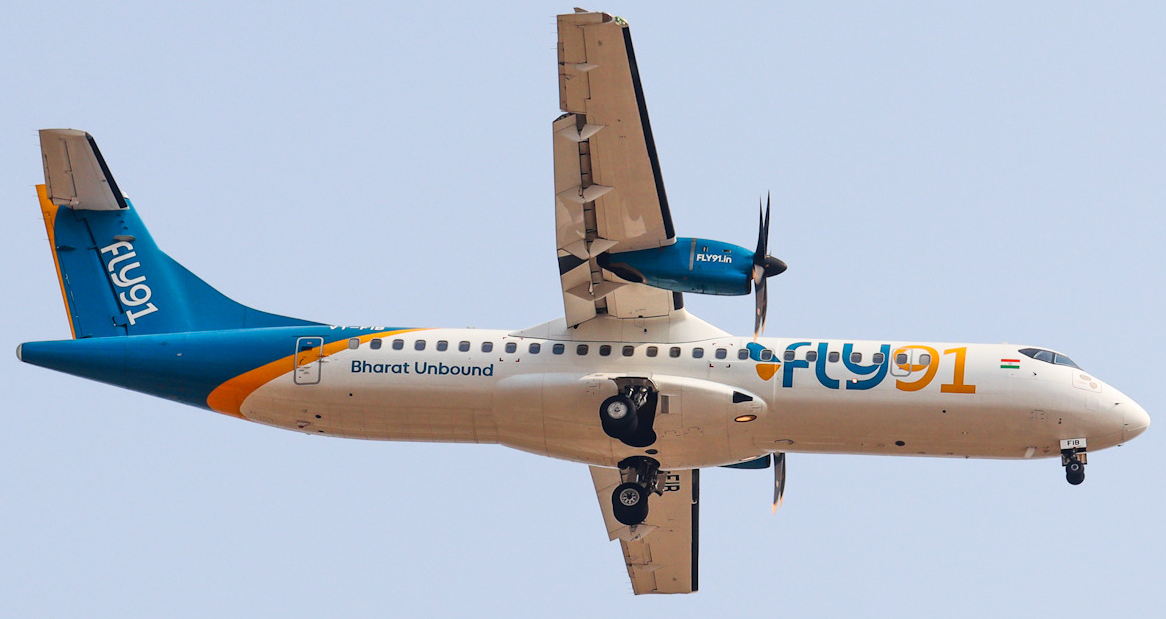
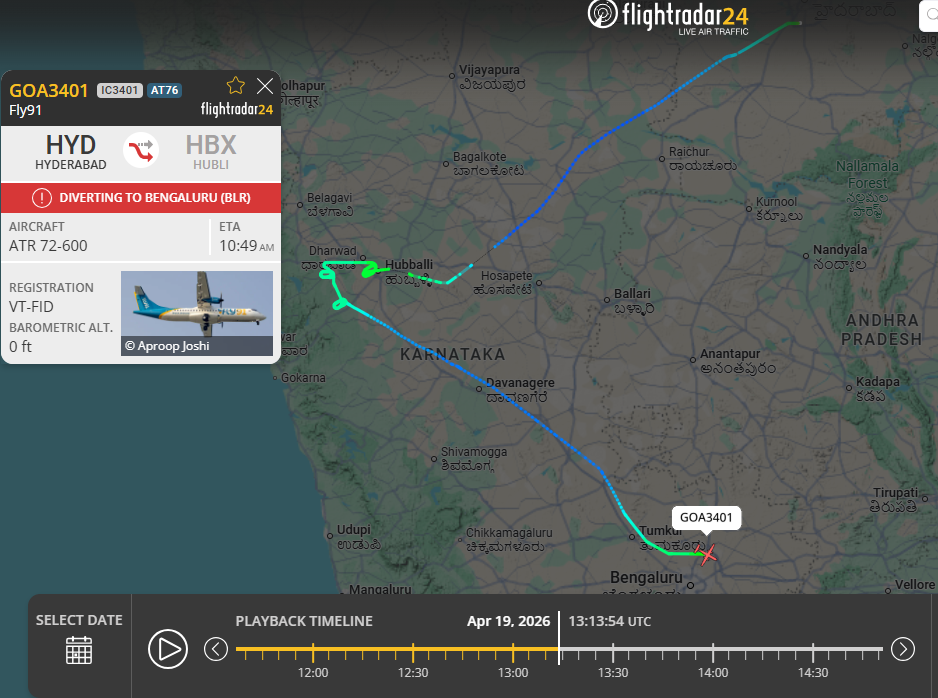
VT-FID

After building up such intense drama in the opening paragraphs, when readers continue down eagerly, this is what they would find:

Fly91 flight IC3401, a small regional airline service, took off from Hyderabad at 3:10 PM Sunday, April 19, heading to Hubli in Karnataka. As usual, it reached over Hubli around 4:15 PM. Due to bad weather, the aircraft held at 4,000–7,000 feet for some time. When the weather didn’t improve, the decision was made to divert to Bengaluru. The flight proceeded there around 5:45 PM and landed at 6:45 PM. Later, after weather conditions improved, it departed again around 7:30 PM and finally landed at Hubli at 9:19 PM, disembarking passengers safely.

This routine event—something that happens countless times every year in India during monsoons—was portrayed as a terrifying aerial ordeal, based mainly on the panic of one distressed passenger. The reporter who did this deserves mention; the editor who added such a headline deserves even more.

The story also includes snippets of passenger conversations:

“Ask the pilot to go to Bengaluru. Or we can go to Belgaum at least,” a passenger could be heard saying.

“Yes. It is nearby,” another passenger agreed.

Amid all this unsolicited advice and arguments, the pilot did make an announcement (to be fair, it was included in the report):

“We are holding. We will keep you updated. Have patience, kindly follow instructions.”

Meanwhile, on the ground, family members of passengers were expressing anger at the airline. The report mentions allegations of poor communication, negligence, and lack of care.

And the airline had said this in a statement:

“The flight IC3401 flying from Hyderabad to Hubballi did not develop any technical snag as is being reported in some sections of the media. The flight departed from Hyderabad at 1500 hours. On nearing Hubballi, the flight encountered bad weather due to which the flight was diverted to Bengaluru as per standard protocol. The flight subsequently returned to Hubballi and back to its home base in Hyderabad.”

Turning an ordinary weather diversion into a sensational news could be partly due to preconceived notions too-

Fly91 operates the ATR-72-600, a small turboprop aircraft with a maximum capacity of about 78 passengers. Some people may feel uneasy seeing such a small aircraft. And some others may feel like getting bigger, on finding themsleves in a small aircraft, so that they can even tell the pilots how to fly the plane.

In reality, the holding time between 4:15 PM and 5:45 PM over Hubli and nearby areas could have been an opportunity for passengers to enjoy the view. At 4,000–7,000 feet, one can clearly see rivers, hills, towns, houses, and even vehicles on roads below.

But how can anyone look outside with all the crying and wailing in the cabin?

Now, why did the pilots decide not to land at Hubli?

The real culprit was cumulonimbus (CB) clouds—dangerous storm clouds—present over Hubli at that time.

At 4 PM, rain clouds were already forming at about 1,500 feet. With a temperature of 35°C, such clouds can rapidly become hazardous. By 4:30 PM, thunderclouds and cumulonimbus formations intensified, descending to around 1,200 feet.

Fly91 Diversion

By 5 PM, cloud build-up was increasing further. Interestingly, it wasn’t raining yet, so passengers looking outside might not felt the weather was bad.

Visibility was around 5,000 meters, but conditions could deteriorate suddenly—rain could begin anytime, obscuring the runway completely.

Wind direction could shift abruptly across or along the runway. Also, the presence of storm clouds at around 1,500 feet along the approach path is a serious hazard.

In short, even though the conditions didn’t visibly look severe, pilots correctly assessed that the weather could turn dangerous at any moment. That is why they chose not to land and eventually diverted to Bengaluru. And it indeed was a wise decision.

  • Jacob K Philip is the Editor of Aviation India/Indian Aviation News Net. He can be reached at jacob@indianaviationnews.net
Share this:
Share this page via Email Share this page via Stumble Upon Share this page via Digg this Share this page via Facebook Share this page via Twitter

US confirms crash of $171mn ISR UAV over Arabian Gulf

By Jacob K Philip

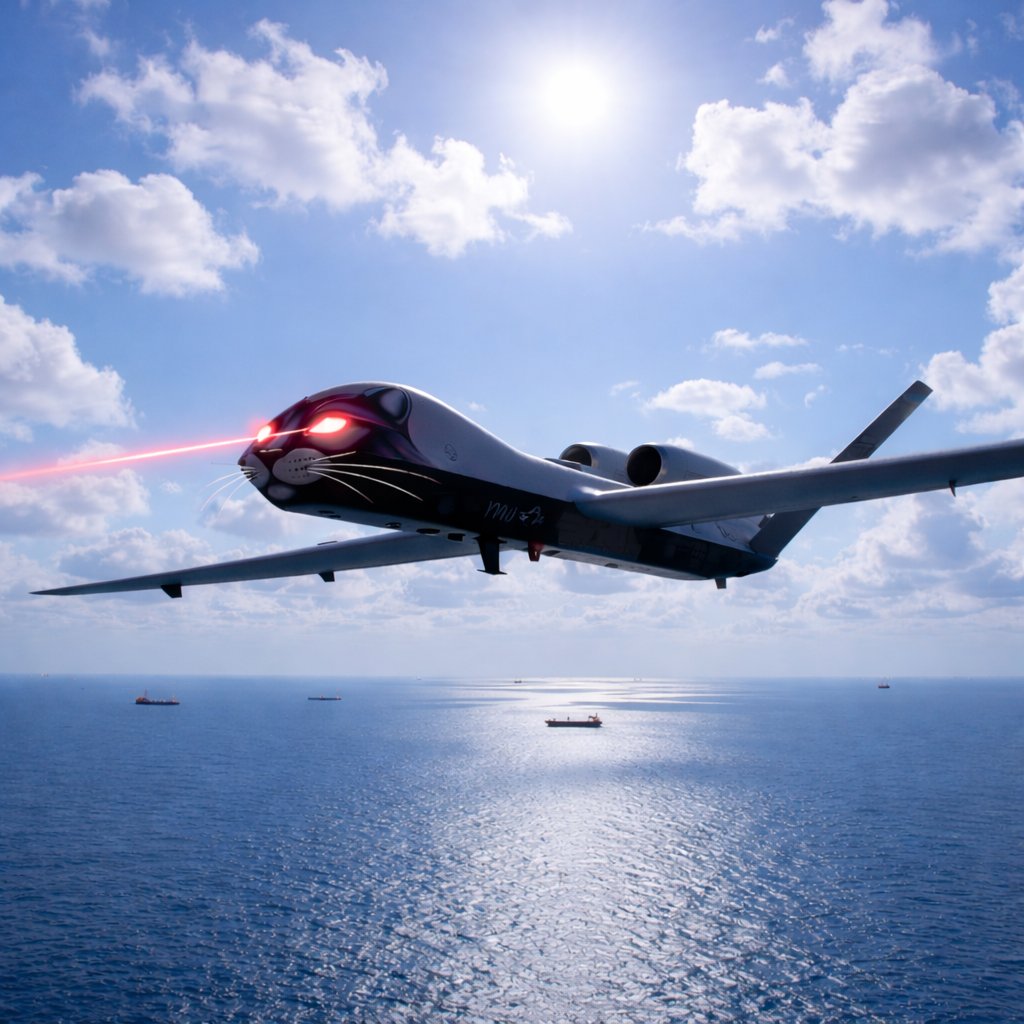
It is now clear that the US Navy’s Northrop Grumman MQ-4C Triton—a remote-controlled intelligence, surveillance, and reconnaissance (ISR) aircraft—which went missing after issuing a distress signal during a patrol of the Strait of Hormuz, has indeed crashed.

MQ-C Triton
.

The incident occurred on the 9th of this month at 3:42 PM, while it was flying at an altitude of 9,250 feet over the Arabian Gulf between Iran and Saudi Arabia.

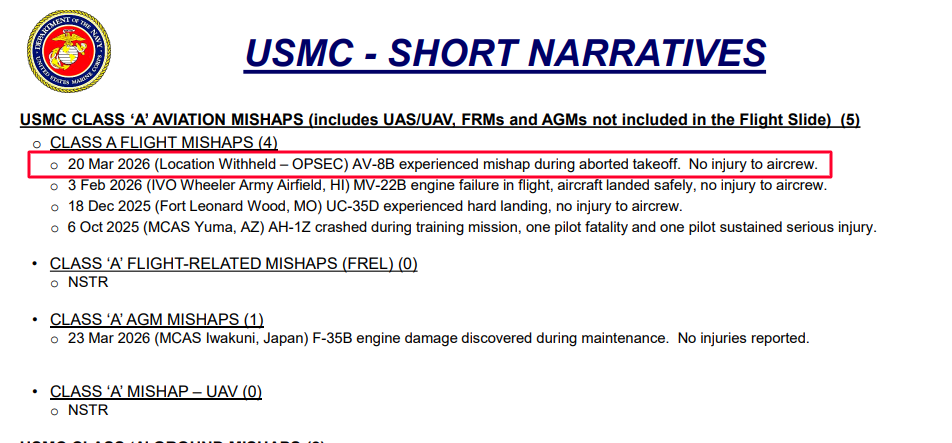
The loss of the Triton on April 9th has been recorded in the list of this year’s naval accidents on the official website of the Naval Safety Command (https://navalsafetycommand.navy.mil), the safety and security wing of the U.S. Navy. (See the screenshot of the website page).

USN Safety page
.

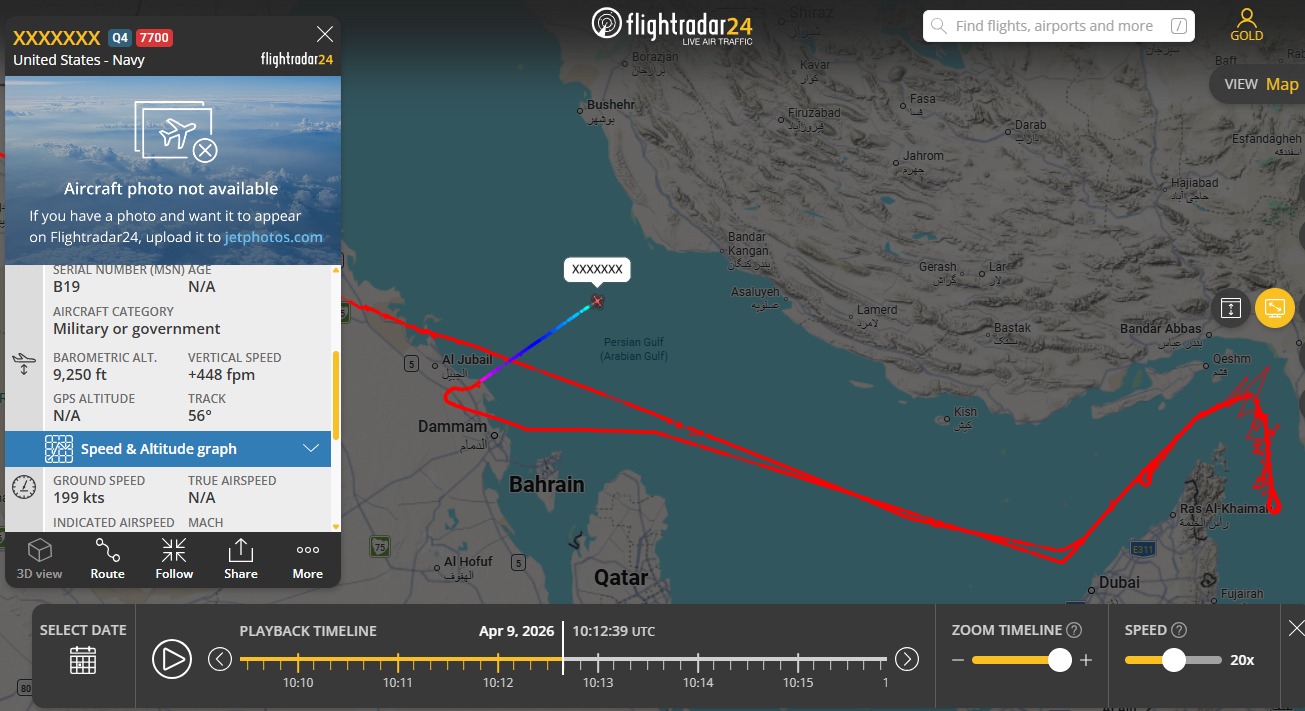
Although the website states that the information regarding the exact crash location is being “withheld,” it is certain that both incidents are one and the same, as it was on April 9th that the aforementioned Triton squawked 7700 (emergency code) and disappeared over the sea while flying at a low altitude. The website also clarifies that no injuries were reported in the crash of this unmanned aerial vehicle (UAV).

Notably, the accident has been categorized as a Class A mishap. This category includes accidents resulting in damages exceeding $2.5 million. The current estimated value of this aircraft is $171.7 million (approximately ₹1,604.3 crore as per current exchange rates).

With this, the aircraft with registration number 169804 becomes the first Northrop Grumman MQ-4C Triton that the United States has officially acknowledged losing in connection with the Middle East conflict.

Additionally, six days before the war began, on February 22nd, another Triton (Registration: 169600) issued a 7700 distress signal during a pre-war surveillance flight and landed at the Al Dhafra Air Base in Abu Dhabi. While it hasn’t been seen since and can be assumed to be completely out of service, there has been no official confirmation regarding that specific case yet.

Timeline of the April 9 crash:

Mission Phase: After completing its surveillance mission at altitudes between 47,000 and 52,000 feet, the drone was heading back toward Sigonella (Italy).
MQ-4C path
.
The Descent: Around 3:26 PM, while flying at 52,000 feet west of Al Ju’aymah (north of Dammam, Saudi Arabia), the aircraft suddenly began to lose altitude.

Final Maneuvers: As it descended, the aircraft performed a U-turn. It only began emitting a distress signal several minutes later, by which time it was over the sea north of Qatar. It briefly headed back toward Saudi Arabia before turning right toward the Iranian coast.

The Disappearance: It finally vanished from radar over the sea after dropping to an altitude of 9,250 feet.

  • Jacob K Philip is the Editor of Aviation India/Indian Aviation News Net. He can be reached at jacob@indianaviationnews.net
Share this:
Share this page via Email Share this page via Stumble Upon Share this page via Digg this Share this page via Facebook Share this page via Twitter

Europe Talks Anti-War — But Its Skies Tell Another Story

By Jacob K Philip

The news that Italy and Spain have imposed restrictions on the passage of planes participating in the US war against Iran, and that Austria has rejected Trump’s demand to open its airspace, has led to the perception that the whole of Europe is gradually turning against the Middle East war.

However, the fact is that there has been no new restriction from Europe that would cause any significant inconvenience to the United States since the war began on February 28. It is just that Switzerland and Austria have never given permission to any country’s warplanes in the past, and they still do not.

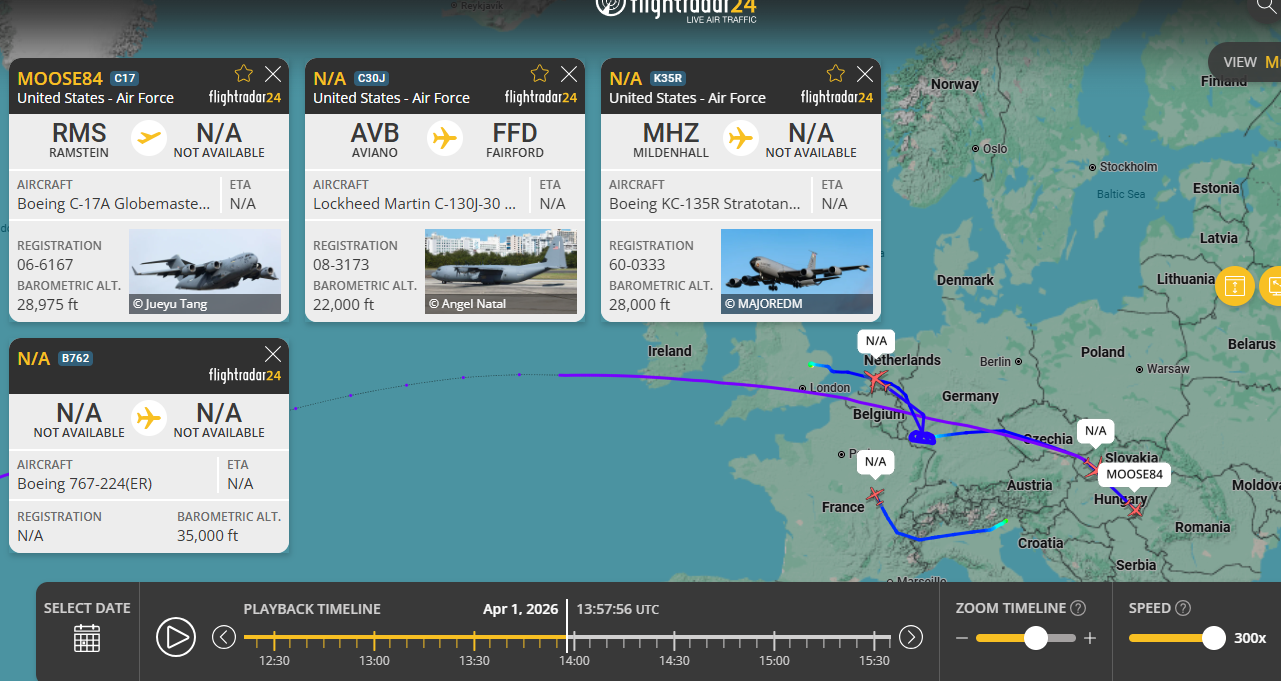
Tankers and transport planes of the USAF flying to and from the Middle East evade Austria, Switzerland

Although Italy and France have recently started saying that they have imposed restrictions, in reality that has not caused any significant disruption to US military aircraft movements.

The skies of the UK, Germany, the Netherlands, Belgium, Denmark, Norway, Portugal, Poland, Romania, Greece, Ireland, Finland and Sweden are still open.

Though the Czech Republic, Slovakia, Hungary, Bulgaria, Croatia and Slovenia say they allow military aircraft to fly over their airspace only under certain conditions, tracking sites show defense aircraft of all hues and colours flying freely through their skies to the Middle East.

Unlike these countries, Austria and Switzerland have very different reasons for keeping fighter jets out.

After World War II, to regain its sovereignty, Austria, which was occupied by the Allies (the US, the Soviet Union, the UK and France), had to agree to the condition that it would remain a neutral, non-aligned country like Switzerland. It is still not a member of NATO and does not allow foreign military bases because of this treaty.

So Austrian leaders could not have allowed US warplanes to fly over their airspace even if they had wanted to.

The neutrality policy of Switzerland, located in the heart of Europe, was decided by the European countries of Austria, Russia, Prussia, the UK and France at the Congress of Vienna in 1815 after the fall of Napoleon. They strictly keep any aircraft involved in the Iranian attack away from their airspace, with the exception of non-war-related transport aircraft, not because the war is not ethical, but to comply with the Vienna Congress.

Just as I had written before, Italy’s recent aversion to US warplanes is nothing more than a drama to satisfy the growing anti-war and anti-Trump sentiment in the country. Planes carrying personnel and supplies to the war still have no difficulty landing at and taking off from Italian air bases through the many loopholes in its regulations.

Although France’s Macron has stated that he does not believe that the Strait of Hormuz can be opened through military action and that he should not heed Trump’s call to join the US in a war against Iran, the fact is that the skies of France, a NATO member, are always open to US military aircraft.

Then there is Spain.

Although Spain has been speaking out against the war in recent times, the fact is that there is still no significant obstacle for US military aircraft to land at the US naval base in Rota and the Morón Air Base and fly to the Middle East. Although it is stated that aircraft carrying weapons and attack aircraft directly related to the war will not be allowed, as in the case of Italy, these policies are also very flexible and can be relaxed if necessary.

Beyond creating an impression that Europe’s skies are not open enough for warplanes to fly, the anti-war statements of the European countries are of not much significance.

Now, the reason why Trump has repeatedly asked Austria to forget about the old treaty and open up the skies:

It is all about money and time.

If Austria, which is located in the middle of the flight path from US military bases in Europe to the Middle East, were to be avoided, it would mean flying 300–500 kilometres more each way. This means that the flight time of military tankers and transport aircraft would be 20–45 minutes longer. In the case of tanker aircraft, this means 2–4 tons more fuel would be burned. And it is not a handful of aircraft that fly along this corridor day and night to the Middle East.

Whatever it is, don’t forget that Trump is ultimately a businessman with a clear sense of profit and loss.

  • Jacob K Philip is the Editor of Aviation India/Indian Aviation News Net. He can be reached at jacob@indianaviationnews.net
Share this:
Share this page via Email Share this page via Stumble Upon Share this page via Digg this Share this page via Facebook Share this page via Twitter

West Asia Conflict: Surprisingly Low Airpower Losses — Or Just the Visible Tip?

By Jacob K Philip

How many military aircraft/remotely controlled aircraft/drones have both sides lost in the West Asia war so far?

While it is true that the first casualty in a war is truth and facts, there are still some figures that can be confirmed as of April 2, a month and three days after the war began.

If we sift through all the information spread by both sides’ news channels, newspapers, and especially social media, it can be seen that the reliable numbers are, five aircraft and 60 remotely controlled aircraft/drones.


.
Aircraft:

1. A US Air Force Boeing KC-135 Stratotanker aircraft.
-Crash on March 12 while flying over western Iraq
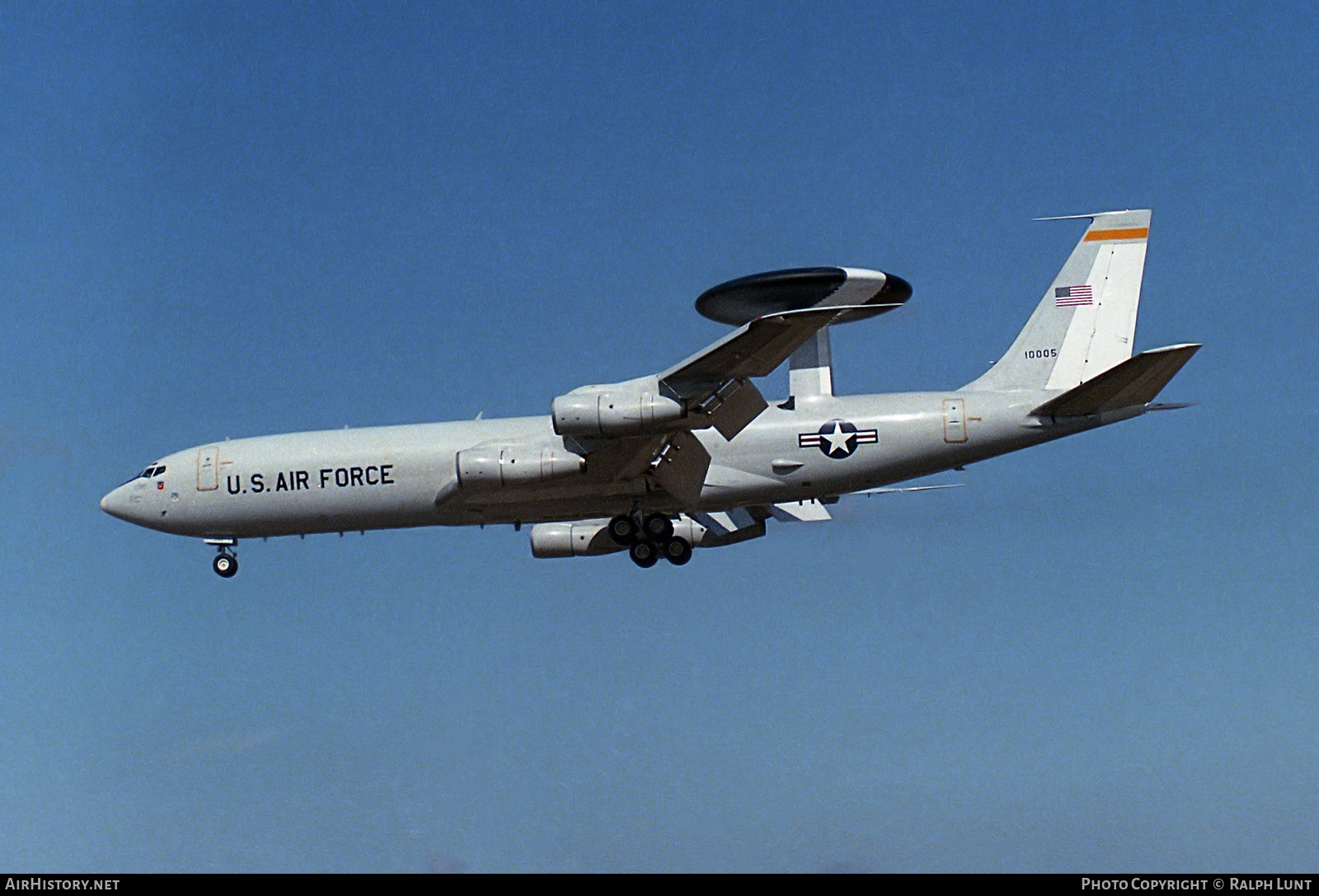
2. A US Air Force Boeing E-3 Sentry AWACS aircraft (registration 81-0005).
-Destroyed by an Iranian missile on March 27 while parked at Prince Sultan Air Base in Al Kharj, Saudi Arabia.
3. Three US Air Force F-15E Strike Eagle fighter jets were accidentally shot down by the Kuwaiti Air Force near Al Jahra, Kuwait, on March 1.

Total 5.

Drones, Remotely Controlled Aircraft:
1. US MQ-9 Reapers – 12
Shot down and damaged during the attack.
2. US MQ-9 UAVs – 5
3. US MQ-4C Triton – 1
This Northrop Grumman MQ-4C remotely piloted-reconnaissance aircraft, registration 169660, has not flown since it made a distress call and landed at Al Dhafra Air Base in Abu Dhabi on February 22.
4. Iranian attack drones (such as the Shaheed) – 40
This is not a complete count. This is because many drones are launched together and many drone interceptions go unrecorded.
5. Israeli Hermes and Heron UAVs – 2
This is also not a complete count. This is because very little information is publicly available about most of Israel’s drones.

A total of 60.

Although the total loss of aircraft and drones has so far been confirmed to be 65, it is widely reported that seven US fighter jets, four AWACS aircraft, three tankers, four transport aircraft and 20 UAVs (such as the MQ-4C Triton) have been destroyed.

These are reasons why these claims cannot be confirmed –

1. No debris from the crashed aircraft have been found anywhere
2. There are no satellite images of the aircraft that are said to have destroyed while parked at airbases.
3. There were no known search and rescue operations after the aircraft went down.
3. There are also no reports of capture of the crew of the aircraft that are claimed to have been shot down, alive or dead.

The mere fact that the aircraft has not been seen on tracking sites does not prove that the aircraft has crashed. During war, such aircraft may fly completely invisible—with their transponders turned off.

There are two reasons why Iran’s losses are not complete.
The first is that Iran has only fielded a few aircraft, just because they have very few fighter planes. And in the present theatre of war, Iranian aircraft do not penetrate and attack enemy areas. Their primary weapons are all missiles and drones. As mentioned earlier, since many drones are launched at once, the number of losses can often be inaccurate.

The reason why Israel’s aircraft losses are not counted is because of the very strict censorship that exists there. Moreover, the fact that the frontline fighters in this war are the United States, is also minimizing and hiding Israel’s air losses.

  • Jacob K Philip is the Editor of Aviation India/Indian Aviation News Net. He can be reached at jacob@indianaviationnews.net
Share this:
Share this page via Email Share this page via Stumble Upon Share this page via Digg this Share this page via Facebook Share this page via Twitter

Who Started the 2026 Iran War? What Tanker Planes Reveal

By Jacob K Philip

The movements of US Air Force planes in January and February suggest that the United States had not decided when to go to war—or maybe even whether to go to war—with Iran until the day before the attack, and that it was Israel that unilaterally launched the attack on February 28.

It is the Boeing KC-135R Stratotanker aircraft, which refuel fighter jets mid-air, that returned to the United States in two batches in January and February from the US military base at Al Udeid, Qatar, that provide this insight into how the war began.

Tankers returning to the US from Al Udeid base, Qatar, on January 24.

Flight-tracking sites show that four tankers with registration numbers 58-0109, 58-0057, 59-1506 and 57-1441 flew back to various US bases from the Al Udeid military base in Qatar on January 24, and five tankers with registration numbers 60-0356, 58-0018, 58-0042, 59-1508 and 63-8020 returned on February 10.


The tankers that appeared to be moving out of Al Udeid US base in Qatar on Janury 14. Of these five tankers returned to US during February 9, shows Flightradar24. 

Note the dates January 24 and February 10.

As the threat of war grew stronger by the day, Trump said on January 23 that he hoped military action would not be necessary against Iran.

The first batch of tankers returned to the US the next day.

The UAE, Saudi Arabia, Qatar, Egypt, Jordan, Turkey, Indonesia and Pakistan jointly called on February 9 for the conflict not to escalate and for war to be avoided.

The next day, February 10, five more tankers returned to the United States.

It is clear that, because the United States had not decided conclusively in favour of war despite the increasing tension in West Asia, the fuel tankers—indispensable for air warfare—were sent back to their home bases 11,000 kilometres away.

Although things were becoming more complicated even as the second batch of tanker planes were flying back to the United States, there was still no sign that the United States had reached a final decision to go to war.

The mediator, Oman, was also saying that things were progressing smoothly.

While rapid military moves continued, by February 16 Trump had said that the US would retaliate if Iran attacked. But the second round of Iran-US talks in Geneva on the 17th ended with a decision to prepare guidelines for further talks.

The third round of talks was held on the 26th in Switzerland at the residence of the Omani ambassador to the UN. After the talks, Iran announced that it would not stockpile enriched uranium and would allow IAEA inspections. Later, the Omani foreign minister said that good news might be available soon.

The next day, on February 27, although Trump said he was not happy with the position taken by Iran in the talks and that military action remained an option, he stopped short of saying that a final decision on war had been made.

However, 24 hours later, on February 28, Iran was attacked without warning.

Some believe the US was preparing for the February 28 attack while creating the impression that it was not, by hiding most of its war preparations and by participating in the nuclear talks.

That was quite possible, given the history of deception and wartime tactics associated with both Israel and the United States.

However, the trajectory of the tankers in question during these days paints a different picture.

After the en masse return of tanker planes to the US on January 24 and February 10, they appeared to be returning to West Asia only hours after the war began, that is, during early morning of February 29.

The return of tanker convoys continued until March 3.

Tanker planes coming back to West Asia early morning of February 29.
Tanker planes returning to West Asia on March 3.

If the intention had been to mislead Iran into believing there would be no war, there would have been no need for the tankers to fly all the way back to the US. After flying out of the Middle East with their transponders on, they could simply have returned to US bases in the Gulf in invisible mode (after turning off their transponders).

Remember that these planes never returned to West Asia before the war, even though the talks mediated by Oman, which lasted until February 27, were oscillating between failure and success.

The fact that the return flights began only hours after the attack indicates that the war that started on the morning of February 28 was unexpected for the United States.

There is another reason to believe that Israel pushed the hesitant United States into the war by carrying out the first attack, which killed Iran’s Supreme Leader, Ayatollah Ali Khamenei.

Eliminating the leadership of the attacked country at the very beginning of a war is considered a distinctive Israeli strategy.

And the F-35I Adir, a stealth fighter jet that many defence experts believe was used in the attack, is operated not by the United States but by Israel.

This aircraft is capable of conducting long-range attack missions without the need for in-flight refuelling. If refuelling was needed at all, Israel had Boeing 707 Re’em tankers. In other words, they did not have to rely on American Stratotankers.

Two hours after the first attack that killed Khamenei and other leaders, the Minab school attack—which killed 180 people, mostly girls—took place, marking the entry of the United States into the war that had been started by Israel.

  • Jacob K Philip is a Kochi based aviation analyst and honorary editor of Aviation India. He can be reached at jacob@indianaviationnews.net
Share this:
Share this page via Email Share this page via Stumble Upon Share this page via Digg this Share this page via Facebook Share this page via Twitter

Pilot error caused crash of LuLu Group MD’s copter in Kerala: DGCA report

By Jacob K Philip

A chain of unusual and erroneous actions taken by the pilots caused the crash of a helicopter last year in India that was carrying M. A. Yousuf Ali, the chairman of UAE-headquartered multinational company Lulu Group, says the report of an investigation ordered by the DGCA, India’s aviation regulator.

Unlike the media widely reported that time, the three year old Agusta Westland AW109SP helicopter was not making an emergency landing but was actually falling into a swamp at Panangadu, near Kochi, in the south Indian state of Kerala, as per the investigation report.

The incident occurred on April 11, 2021 a few minutes before 9am at Panangadu. The copter, that had taken-off from a helipad at ‘Y Mansion”, the residence of Yousuf Ali, was heading to land on the roof-top helipad of ‘Lakeshore’, a private hospital. The aerial distance to the hospital from Yousuf Ali’s residence was just 3.7km and the total flying time was estimated to be 5 minutes. While the copter was in the approach stage to land on the Lakeshore helipad, it fell into the open swamp from a height of about 300ft. Upon falling, the helicopter partially sunk into the soft mud, with dirt water entering the cockpit by up to 2 feet. Engines were shut down and all the occupants vacated the helicopter by standard exit and were transported to nearby hospital. There was no injury to any of the occupants on board, and there was no post incident smoke or fire.

VT-YMA after the crash
The helicopter after the crash.

Though the pilots later said they had made a forced landing due to loss of engine power after experiencing a sudden drop in altitude, the DGCA report says there were nothing wrong with any of the systems of the helicopter including the engine. Also, the pilots had made no landing – forced or otherwise.

It was a series of actions by the pilots right from the taking off of the machine, that culminated in the crash that April morning, concludes the report.

To start with, when the helicopter took of from the ‘Y Mansion’,  at Chilavannoor, Kochi, the pilots activated ‘Engine torque limiter function’ of the copter. This function limits the torque (power) produced by the engine to 220 % instead of its maximum capability of 324%. Why this limit was set is not clear.

Secondly, when it was time for the copter to take a left turn to align with the roof-top helipad of the Lakeshore hospital, the pilot increased the pitch of the craft (raised the nose) to an unusual high value of about 15 degrees. Though with the nose up, the engines needed more power to maintain the speed, that was never given. As a result the speed was reduced to 40 kts from 80kts and the copter began to descend rapidly. Three seconds after the pitch was increased to 15, it again was raised to 21 degrees, again unusually, by the pilot. As a result the the fall became quicker at 2000ft/minute and the horizontal speed became almost zero. On realizing the craft was falling, the pilots tried to increase the engine power, so as to climb up. But because of the ‘Engine torque limiter function’ they had earlier switched on, the fuel supply to the engine got reduced after the power reached the 220%. Less fuel means less power and the pilots could not climb up from the 300ft altitude there found themselves in and the helicopter fell to the ground within seconds.

flight path- VT YMA
The flight path of the helicopter – Reproduced from the DGCA report

The report explains that, because of the actions of setting a limit to the engine power and then increasing the pitch attitude, the helicopter also had entered into a non-recoverable stage called ‘Vortex Ring State (VRS).’ With VRS setting in, the lift produced by the rotor is massively reduced and the rate of descent of the helicopter is increased accordingly. By pulling on the collective, the effect is amplified. The VRS can be ended only by switching to autorotation or by taking up horizontal speed. But at Panangad that morning, the speed was actually getting reduced to half of the normal speed, seconds before the crash.

The DGCA report concludes that the erroneous actions taken by the pilots resulted in the crash was also because of the loss of situational awareness and not sticking to the standard operational procedures.

While examining the cockpit voice recorder, the investigators found that the voices in the cockpit were overlapped by the conversations among the passengers in the cabin. It was because the cockpit was not isolated from the cabin, even during the critical stages of the flight. The reason why the pilots lost the situational awareness can be these distractions from the cabin. Though the well experienced pilots were familiar with the short route, they failed to realise for some seconds that the copter was flying too low. Also, the first Officer (who was acting as the ‘pilot monitoring’) failed to monitor flight parameters during the critical phase of flight. It was only when the copter reached the altitude as low as 300ft, that pilot in command realised the gravity of the situation. Though he immediately increased the power to go up, because their own previous action of switching the ‘Engine torque limiter function’ on, the power refused to go up after it reached 220% and the fuel supply to the engine too got reduced. The rotor speed was dropped because of this and even the the automated warning ‘ROTOR LOW’ was sounded. By then the copter had got entangled in the irrecoverable Vortex Ring State and there was nothing that could have done but to braze for the crash.
And the helicopter at that moment happened to be above a marshy land was just providential. Otherwise the crash would have been real disastrous.
The investigators also have pointed out that the pilots in this flight (and in their previous flights too) were carrying out cockpit checks communicating with ‘gestures’. Because the procedure of ‘challenge and response’ was not carried out as per the SOP, the chances are high that crucial parameters of the flight was overlooked.

Share this:
Share this page via Email Share this page via Stumble Upon Share this page via Digg this Share this page via Facebook Share this page via Twitter

Diminishing Returns: Calculated Misery in Air Travel

Dr. Binoy Kampmark

If there comes a point when people will decide not to fly, the issue may well be less to do with any moral or ethical issue with climate change than the fact that commercial flights have become atrocious. They are naked money-making concerns with diminishing returns on quality. The key factor that plays out here is what economists like to term inelastic demand. Prices can be raised; service quality can be reduced, but customers will keep coming. The demand remains, even if the supply leaves much to be desired.

The phenomenon is distinct over the long-haul carriers, which have, at least until recently, been spared the stripping phenomenon. Singapore Airlines, which prides itself for an almost aristocratic bearing towards its customers, proved skimp its Melbourne to Singapore leg. An insulting sampling of “toasties” was offered as a starter, a culinary outrage that did not go unnoticed. Indian passengers who had selected special meals in advance were on the money; pungent curries and dhal filled the cabin as this ridiculous excuse of a meal was handed out to customers. A few desperate, and disgusted punters asked the flight attendants if there were spare vegetarian options.

Budget airlines may have something to explain in this regard. The revolution of the cheap fare came with the reduction of expectations. No frills travel came with a certain contempt on the part of the service providers: food and drink would no longer be gratis; seat allocations would have to be purchased in advance and check-in or carry-on luggage would have to be paid for. A turning point was Dublin-based Ryanair’s attempt to go easy on toilet numbers – one per aircraft – and charge customers for their use. As the company’s penny-pinching CEO Michael O’Leary said at the time, “We rarely use all three toilets on board our aircraft anyway.” Bladders be damned.

Instead of aspiring to a higher level of service, the traditionalists have voted to go down a notch or three. What budget airlines do badly, we can do worse. The law of diminishing returns is pushing all air travel carriers downwards in what has been seen to be an exercise of “calculated misery”. The experience is appalling and unpleasant, but need not necessarily be intolerable. The result is a curious revision of the term “upgrade”. As Alex Abad-Santos laments in Vox, passengers upgrade their seats, not to get a more spectacular service or experience, but “to avoid hell.”

Managing such misery is hardly original, though Tim Wu of Columbia Law School can be credited for giving a good overview of it when writing in 2014 for The New Yorker. “Here’s the thing: in order for fees to work, there needs to be something worth paying to avoid. That necessitates, at some level, a strategy that can be described as ‘calculated misery’. Basic service, without fees, must be sufficiently degraded in order to make people want to pay to escape it. And that’s where the suffering begins.”

Nothing says such suffering than crammed economy seats on a long-haul flight. Shoulders and arms are jammed; legs can barely move. The trend was such that Bill McGee, a writer with more than a passing acquaintance with the airline industry, would note, referring to the United States, that the most spacious economy seats “you can book on the nation’s four largest airlines are narrower than the tightest economy seats offered in the 1990s.”

Things are not much better in terms of the European market. Mediocrity mixes with indifference, even on flights which are half-full. A flight from London Heathrow to Copenhagen with Scandinavian Airlines was characterised by a certain snooty indifference on the part of the flight attendants. Much babbling was taking place in Finnish – why would you want to assist passengers? Little by way of interest in the customers was afforded. Curt instructions were issued; requests for coffee were received with glacial stares. Naturally, to receive a meal and drink that wasn’t water that had seen better days required forking out of the plastic fantastic. Gone are the days when international airlines behaved as such, wishing to make matters decent, comfortable and even pleasantly bearable; the European air space finds itself populated by the stingy and the tight-belted.

Commercial airlines from SAS to Singapore Airlines have taken whole sheafs of extortion from the budget airline book of making customers pay for selecting seats. The stress here is budget service at caviar prices. This cheeky form of thieving imposes a cost on the act of jumping the queue for a better place on the flight. And this is not all. You book a ticket with a flight, only to find at the airport that you had purchased a “light” version, meaning that you have to pay for carryon luggage.

High time for a customer revolt, but the industry is distinctly programmed. Even when airlines have been well disposed to their customers, such as JetBlue, the corporate monsters of Wall Street have howled. It’s bad form to provide decent service within reasonable expectations. Efficiency, and filling the seats, is what matters, whatever the quality. Fee-free services, being conscious of the brand and a “customer-focussed” approach was simply not on. Eventually, JetBlue caved in and joined the market of calculated misery.

 Dr. Binoy Kampmark was a Commonwealth Scholar at Selwyn College, Cambridge. He lectures at RMIT University, Melbourne. Email: bkampmark@gmail.com
Share this:
Share this page via Email Share this page via Stumble Upon Share this page via Digg this Share this page via Facebook Share this page via Twitter

Airports’ privatization: CIAL not qualified to bid for Trivandrum

By Jacob K Philip

The move to privatize the second batch of airports in India has evoked varying responses from the public and the stake holders. Though it seems the Airports Authority of India (AAI) top brass is all for it, the staff of the Mini Ratna company have made it pretty clear that they are dead against selling out the profitable airports and are already in the warpath.
But the most interesting response seems to be that of the Government of Kerala. To prevent the Thiruvananthapuram International Airport ending up in private hands, the govt has decided to take an extraordinary step – to participate in the competitive bidding to run the airport.
Reports are already allover the media that the Government has authorized Cochin International Airports Ltd (CIAL), the company that had set up and runs the Kochi International Airport in PPP mode, to bid for the right to run the state capital airport. And quoting state government officials and CIAL staff, the media reports assert that CIAL qualifies to bid, as per the criteria enlisted in the Request for Proposal (RFP) released by AAI.

But a careful study of the RFP makes it abundantly clear that CIAL does not have the PQs (Pre-Qualifications), at least for the time being.

Here is why:

Though all the media reports say CIAL qualifies, because the company has the minimum net-worth stipulated in the RFP, that is Rs 10,000 million (1000 crore), there still is one more PQ to meet.

See how the RFP describes this “Technical Qualification” (One may wonder why AAI preferred to call it technical when it too is all about finance):

For demonstrating technical capacity and experience (“Technical Capacity”), the Bidder shall over the past 7 (seven) financial years preceding the Bid Due Date have:
(i) paid for, or received payments for, construction of Eligible Projects; and/or
(ii) paid for development of Eligible Project(s); and/or
(iii) collected and appropriated revenues from Eligible Project(s),

such that the above amount is equal to or more than:
(i) 100% (one hundred percent) of Rs. 3500,00,00,000 (Rupees Three Thousand Five Hundred Crore) in case of 1 (one) Eligible Project; or
(ii) 50% (fifty percent) of Rs. 3500,00,00,000 (Rupees Three Thousand Five Hundred Crore) in case of 2 (two) Eligible Projects; or
(iii) 40% (forty percent) of Rs. 3500,00,00,000 (Rupees Three Thousand Five Hundred Crore) in case of 3 (three) Eligible Projects.

This means, for CIAL to qualify, the total revenue they have collected from the airport business during the past seven years must be more than or equal to 35000 million (3500 crores) Rupees.

But CIAL could earn only Rs. 2923.03 crores during this period, as per their annual reports:

  • 2017-18    553.42
  • 2016-17    487.28
  • 2015-16    524.53
  • 2014-15    413.96
  • 2013-14    361.39
  • 2012-13   306.50
  • 2011-12    275.95

But there still was a way out.

CIAL has five subsidiary companies in which it has 99% share holding. They can very well apply together. These are the companies:

  1. Cochin International Aviation Services Ltd
  2. CIAL infrastructure Ltd
  3.  Air Kerala International Services Ltd
  4. CIAL Dutyfree and Retail Services Ltd
  5. Kerala waterways and Infrastructure Ltd

Of these, only 1, 2 and 4 generate income.

CIAL’s annual reports give the combined income of CIAL and these 3 companies for the past four years. (It seems those companies generated nil or negligible revenue before that period) .

So the revised figures for seven years look like this:

  • 2017-18    701.13
  • 2016-17    592.65
  • 2015-16    539.38
  • 2014-15    423.53
  • 2013-14   361.39
  • 2012-13   306.50
  • 2011-12   275.95

Now the total is 3200.53 crores – but still Rs.299.47 crore less than the required magical figure of 3500 crores.

But even if the amount had reached 3500, there still was another obstacle.

Read this clause:

(i) 100% (one hundred percent) of Rs. 3500,00,00,000 (Rupees Three Thousand Five Hundred Crore) in case of 1 (one) Eligible Project; or
(ii) 50% (fifty percent) of Rs. 3500,00,00,000 (Rupees Three Thousand Five Hundred Crore) in case of 2 (two) Eligible Projects; or
(iii) 40% (forty percent) of Rs. 3500,00,00,000 (Rupees Three Thousand Five Hundred Crore) in case of 3 (three) Eligible Projects.

This means, for the revenue from the businesses from the affiliate companies to add, they must be at least Rs. 1400 crore (40% of 3500) each. But none of the three sub-companies of CIAL meets that criteria.

So the answer is definite – if the figures given the annual reports of CIAL can be believed,  the company simply doesn’t qualify.

But it still is not the end of the road.

As a bidder of good standing, CIAL indeed can apply for a relaxation in PQs. It is all up to AAI -they can lower the limits any time.

And if Kerala Govt indeed is serious about the bid, they should be convincing the AAI to do that, instead of leaking incorrect info to the media, hoping that will boost their chances.

(Jacob K Philip is a Doha based aviation analyst. He can be reached at jacob@indianaviationnews.net)
Share this:
Share this page via Email Share this page via Stumble Upon Share this page via Digg this Share this page via Facebook Share this page via Twitter