A Blue Light, a Misread Message and a Near Disaster at 35,000 Feet

By Jacob K Philip

The Aircraft Accident Investigation Bureau of India (AAIB) has released its investigation report on the 14th of this month into the near-miss involving a Flydubai Boeing 737 MAX 8 operating from Dubai to Kozhikode and a Turkish Airlines Airbus A330-223F cargo aircraft flying from Chennai to Istanbul.

The incident occurred at 5:17am (IST) on Sunday, August 31, over the Arabian Sea, about 600 km west of the Gujarat coast, at an altitude of 35,000 feet.

The Traffic Collision Avoidance System (TCAS), an onboard computer-controlled safety system, issued warnings (Traffic Advisory) to the crews of both aircraft when the vertical separation between them had reduced to 836 feet and the horizontal distance was about four kilometres.

The incident highlights the risks that can arise in oceanic airspace beyond radar coverage, where air traffic control relies heavily on data-link communication between controllers and pilots. Errors in communication systems or mistakes by their operators can potentially lead to serious accidents.

Here is a short description of the events unfolded in the early morning of 31st August:

Turkish Airlines cargo flight TK6380 took off from Chennai at 3:12 a.m. At around 5:00 a.m., while cruising over the Arabian Sea at 34,000 feet and a speed of 933 km/h, the captain informed the first officer that he would be taking a controlled rest in the cockpit.

A few minutes later, the first officer sent a request to Mumbai Air Traffic Control (ATC) through the Controller Pilot Data Link Communications (CPDLC) system, seeking permission to climb to 36,000 feet.

Mumbai ATC received the request and rejected it shortly afterwards through a text message.

According to the AAIB report, the controller denied the request because Flydubai flight FZ249, operating from Dubai to Kozhikode, was approaching from the opposite direction at 35,000 feet along the same international route, P574, at a speed of about 844 km/h.

However, Mumbai ATC made a critical procedural error while transmitting the rejection. Instead of sending the response as a reply to the original CPDLC request, it was transmitted as a new message. As a result, the aircraft’s CPDLC system later generated a reminder notification, accompanied by an aural alert and a flashing blue light, indicating that the original request had not received a proper response.

When the reminder appeared, the first officer saw the message “REQ CLIMB FL360” displayed on the screen. Believing it to be a clearance from Mumbai ATC, he acknowledged it and initiated the climb. The report concludes that he had mistaken the aircraft’s own climb request for an ATC clearance.

At that time, the Flydubai aircraft was approaching in the opposite direction at FL350 and was 5.6 km away.

Meanwhile, another factor unexpectedly increased the safety margin. Earlier in the flight, the Flydubai aircraft had deviated slightly to the right of route P574 to avoid an area of light turbulence. As a result, it was laterally offset by about 3.7 km from the Turkish aircraft’s track.

As the Turkish cargo aircraft climbed towards the altitude occupied by the oncoming Flydubai aircraft at 35,000 feet, the Traffic Collision Avoidance System (TCAS) on both aircraft detected the developing conflict. When the Turkish aircraft reached 34,164 feet, both systems generated the warning: “Traffic, Traffic.”

The Turkish captain woke up to the sound of the TCAS alert. At that moment, the vertical separation between the two aircraft had reduced to 836 feet and the distance between them was about four kilometres.

Under normal procedures, aircraft operating at these flight levels are required to maintain a minimum vertical separation of 1,000 feet.

The TCAS alert continued for 14 seconds, until 5:16:58 a.m.

By then, the aircraft had already crossed each other. The vertical separation was 692 feet and the distance between them had increased to about ten kilometres. Although the altitude difference remained below 1,000 feet, the TCAS Traffic Advisory was automatically terminated because the aircraft were rapidly moving away from each other. TCAS is based on predicted collision risk rather than a fixed altitude difference.

During the TCAS warning, the captain informed the first officer that he had control of the aircraft. On checking the cockpit displays, he realised that the aircraft was climbing. When he asked the first officer whether ATC had cleared the climb, the first officer replied that clearance had been received.

To verify this, the captain pressed the CPDLC RECALL button and reviewed the displayed messages. The only message visible was “REQ CLIMB FL360″—the climb request that had originally been sent by the crew to ATC. The reminder notification that had apparently been mistaken for a clearance message was no longer visible on the active display and had likely been archived in the system history.

Concerned by the situation, the captain discontinued the climb and levelled the aircraft at 35,000 feet instead of continuing to FL360. He then sent a CPDLC message to Mumbai ATC asking whether climb clearance had been issued. ATC replied that no such clearance had been given.

Since the first officer remained convinced that a clearance had been received, the captain sent another query to ATC. The response was the same: permission to climb had not been granted.

Although the two aircraft continued safely on their respective routes without further incident, reports submitted by the crews after landing in Istanbul and Kozhikode, together with reports from Mumbai ATC, led the Aircraft Accident Investigation Bureau of India (AAIB) to classify the occurrence as a serious incident and launch a formal investigation.

Safety recommendations

Following the investigation, the AAIB issued safety recommendations to Turkish Airlines, the Airports Authority of India (AAI), and Airbus.

Turkish Airlines:
a) Reinforce CPDLC procedures, through training, emphasise on verification of message content (Reminder/received from other units) before executing clearances.
b) Operation Manual of the airline may be amended by adding that, “During the controlled rest period the requests which requires cross check such as significant flight path/Flight Level changes should be avoided unless they are deemed necessary.”

Airports Authority of India:
Conduct recurrent training for controllers on the risks of sending stand-alone CPDLC uplink messages in reply to aircraft requests.

Airbus:
The safety action has already been carried out by Airbus. Airbus has stated that the system now on will not display the reminder message. (The removal was based on the consideration that the flight crew are better positioned to determine appropriate follow-up actions in the absence of an ATC response.)   

  •  jacob@indianaviationnews.net
Share this:
Share this page via Email Share this page via Stumble Upon Share this page via Digg this Share this page via Facebook Share this page via Twitter

The hidden power of airline passenger data

By John Verghese

Airlines are no longer just flying planes.

They are becoming powerful data and AI-driven companies.

Think about your last flight.

Every time you:

  • search for a ticket
  • choose a seat
  • add baggage
  • order a meal
  • or use loyalty points…

you are creating data.

Airlines use this data, along with artificial intelligence and machine learning, to better understand passenger behaviour. This helps them predict what travellers want, often before they even book.
aviation data

Today, airline data analytics is helping airlines:

  •  predict travel demand
  • adjust ticket prices in real time
  • personalise offers and rewards
  • plan smarter flight routes
  • improve the customer experience
  • increase revenue from seats, bags, lounges, and upgrades

According to a recent Boston Consulting Group (BCG) aviation industry analysis, airlines using advanced AI and customer personalisation are improving both profitability and passenger satisfaction.

That is changing the aviation industry fast.

Loyalty programmes are also becoming smarter. Instead of simply handing out points, airlines now use AI-powered systems to send personalised offers at the right time, based on each customer’s travel habits and preferences.

The Gulf region is moving quickly too. IATA has recently highlighted the GCC’s unified aviation strategy as a major step towards better regional co-ordination and smarter use of aviation data. This could help Gulf airlines improve route planning, demand forecasting, and travel efficiency across business and tourism markets.

But there are challenges.

Airlines still need to protect customer privacy, maintain fair pricing, build trusted data systems, and ensure technology enhances the human experience rather than replacing it.

The future of aviation may not be defined only by better aircraft or bigger airports, but by how intelligently airlines use data to understand their passengers.

That shift is already happening.

  • John Verghese is a Senior Editor with Gulf Times, Doha, Qatar. A Communications & Content Strategy professional with 25+ years of experience across the Middle East and South Asia, Verghese specialises in editorial leadership, media communications across print, digital, and multi-platform environments. He can be reached at jverghese30@yahoo.com
Share this:
Share this page via Email Share this page via Stumble Upon Share this page via Digg this Share this page via Facebook Share this page via Twitter

Man on the Runway, an Aborted Takeoff and an Engine Fire: A horror unsaid at Denver?

By Jacob K Philip

A Frontier Airlines plane en route from Denver, Colorado, to Los Angeles, California, struck a pedestrian on the runway at Denver International Airport Friday night, forcing the aircraft to suddenly abort takeoff, triggering a small fire and the evacuation of passengers.

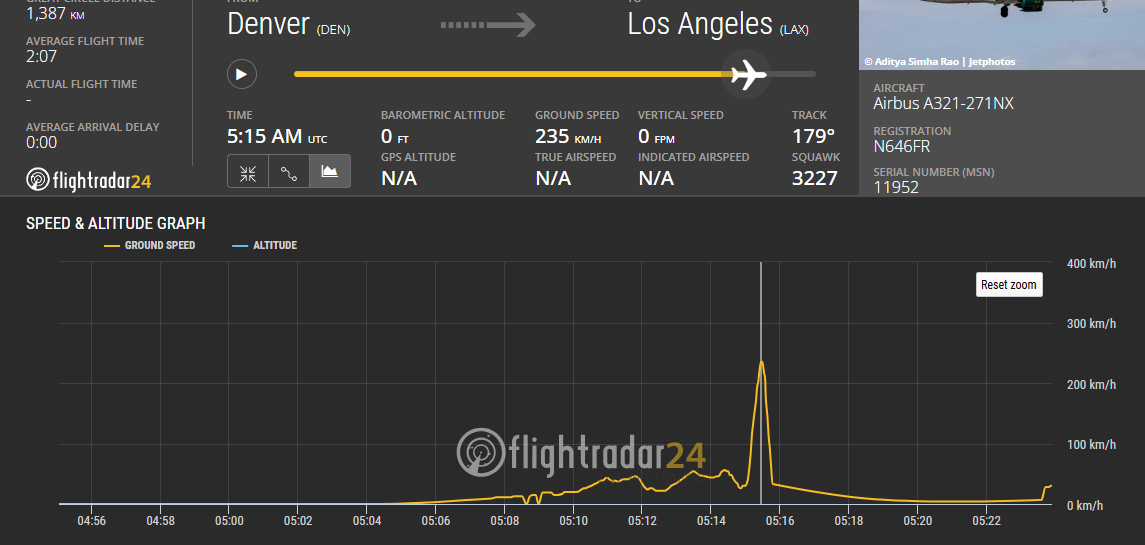
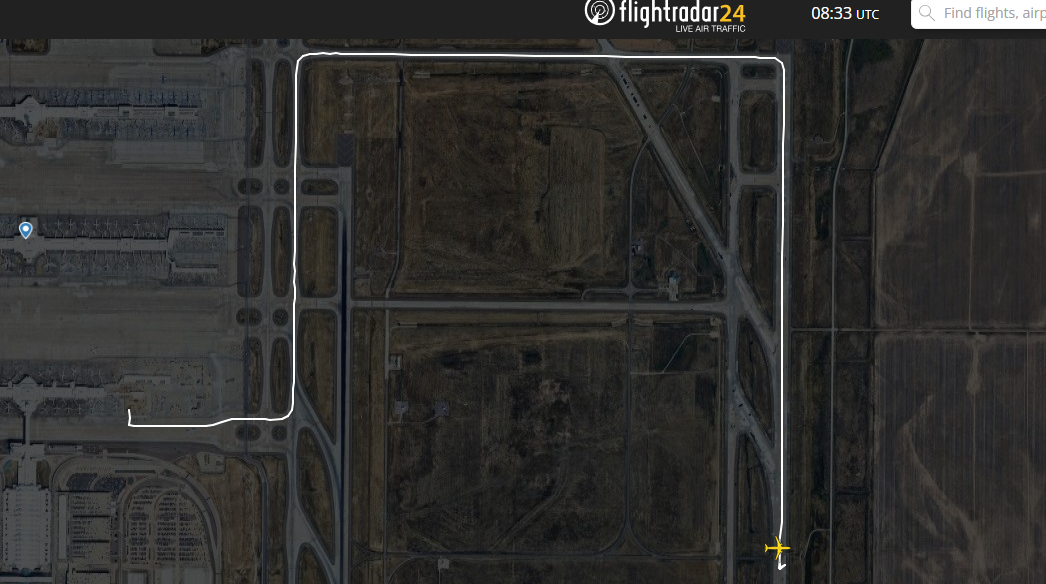
The Airbus A321-271NX, an A321neo with registration N646FR, was departing from Runway 35R at 11:15 p.m. when it reportedly struck a ‘pedestrian’ crossing the runway about 30 seconds after beginning its takeoff roll.

During the takeoff run, the A321neo was approaching its decision speed — commonly known as V1 — the maximum speed at which a takeoff can still be safely aborted. The aircraft was traveling at around 235 km/h when the crew initiated a rejected takeoff.

After realizing the aircraft may have struck someone, the pilots immediately applied maximum braking and reverse thrust to stop the plane. At the time, the aircraft had 231 passengers and crew on board and was carrying about 9,525 kilograms of fuel for the 1,387-kilometer flight to Los Angeles.

The aircraft, weighing roughly 80 tonnes including passengers, fuel, and cargo, came to a sudden stop at high speed. Under such circumstances, enormous friction builds up in the braking system, often generating enough heat to cause smoke or even tire and brake fires.

However, airport authorities and several news reports specifically stated that the fire occurred in one of the aircraft’s engines and was later extinguished.

That unusual detail raises further questions about the accident and highlights gaps in the information released so far.

How did the person reportedly struck by the aircraft gain access to the active runway area inside a major international airport? How could someone cross a runway while an aircraft was accelerating for takeoff?

Who exactly was the “pedestrian” mentioned in the reports — the individual whom the pilot reportedly told air traffic control he had seen walking across the runway?

Was the person an airport employee, a passenger, a maintenance worker, or a trespasser? So far, none of the reports have clarified this.

Now, let us return to the reported engine fire.

As noted earlier, when a large aircraft aborts takeoff at high speed, it is not unusual for the landing gear, brakes, or tires to overheat and even catch fire.

But an engine fire points toward another possible scenario — that foreign objects may have entered the engine during the incident. Such an event can disrupt airflow inside the engine and trigger a compressor stall or engine surge, often accompanied by loud bangs, smoke, sparks, and, in some cases, fire.

That raises another disturbing question: what exactly entered the engine?

It is worth noting that, apart from the pilot reportedly saying he saw someone on the runway and believed the aircraft had struck the person, there has been little mention in news reports about the individual’s condition or what ultimately happened to him.

Another important factor is the height of the Airbus A321neo’s engines above the ground. Depending on aircraft weight and tire pressure, the Pratt & Whitney PW1100G or CFM LEAP-1A engines fitted on the A321neo sit only about 80 to 120 centimeters above ground level. The engine fan diameter itself is approximately 198 to 206 centimeters.

And the average adult human height ranges between 167 and 182 centimeters.

During takeoff, the engines of an A321neo ingest 500-700 kilograms of air every second. That means, the aircraft’s two engines pull in air at a rate 10,000 times more powerful than a typical household vacuum cleaner.

Given those forces, and with the aircraft moving at 235 km/h during the rejected takeoff, one cannot help but imagine — with horror — what might happen to a person caught in front of the engines.

  • jacob@indianaviationnews.net
Share this:
Share this page via Email Share this page via Stumble Upon Share this page via Digg this Share this page via Facebook Share this page via Twitter

Two Aviation Disasters, One Dark Question Hanging Over

By Jacob K Philip

Eleven months after an Air India Boeing 787 crashed seconds after takeoff from Ahmedabad while operating a flight to London, attention has now turned to a similar tragedy in China four years ago — after a newly released US report suggested that the crash may have been deliberate.

A document released by the US National Transportation Safety Board (NTSB) says the fatal crash of a China Eastern Airlines Boeing 737-800 in March 2022 could have been caused by the deliberate shutdown of both engines in flight.

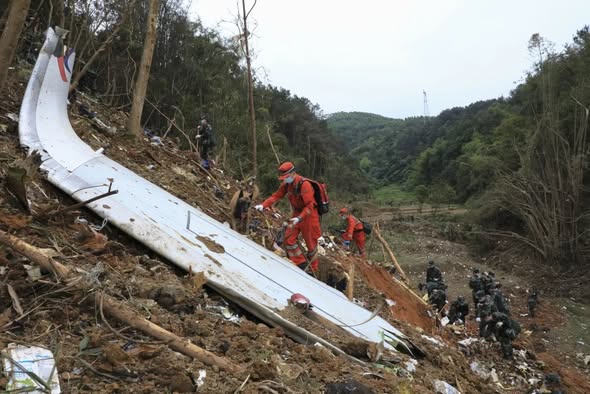
The aircraft had taken off from Kunming Changshui International Airport at 2:23 pm on March 21, 2022, bound for Guangzhou Baiyun International Airport. All 132 people on board were killed.

Search and rescue team at China Eastern Airlines crash site.

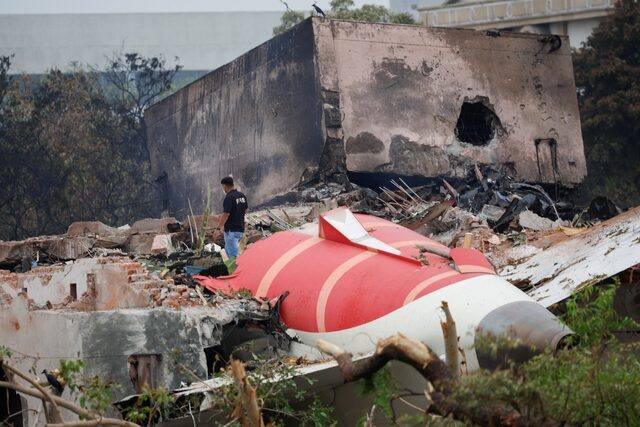
The NTSB document, released under the US Freedom of Information Act, has intensified global debate because of its striking similarities to revelations contained in the preliminary report into the recent Air India crash.

The US agency participated in the China Eastern investigation because the aircraft was US-made. According to the report, data extracted from the aircraft’s black boxes showed that both engine fuel control switches had been moved from RUN to CUTOFF while the aircraft was cruising at 29,100 feet.

“The only explanation” for the switches being moved, the NTSB noted, was that someone intentionally changed their position, as there had been no indication of any mechanical or system malfunction before the event.

Roughly an hour after departure, the aircraft suddenly entered a steep descent. In just over two minutes, it plunged from 29,100 feet to 9,075 feet before disappearing from radar near Wuzhou in southern China.

Air India crash debris

Air traffic controllers repeatedly attempted to contact the cockpit during the descent, but there was no response.

Investigators noted that the switches were never returned to the RUN position, strengthening suspicions that the act may have been intentional.

The report also casts doubt on suggestions that the aircraft simply became uncontrollable after engine failure. Aviation experts point out that even with total loss of thrust at cruising altitude, the aircraft should have been capable of gliding forward for a considerable distance and potentially making an emergency landing.

The NTSB further revealed that the flight data recorder stopped functioning as the aircraft descended through 26,000 feet after electrical power was lost. However, the cockpit voice recorder continued operating on battery power until impact.

According to the report, the cockpit voice recorder suffered catastrophic damage in the crash, and no backup copy of the audio had been created. China has also not handed the original recording to US investigators.

Investigators believe it is unlikely that the pilots intentionally shut down both engines and then immediately forced the aircraft into a near-vertical dive. One theory under consideration is that a third person may have entered the cockpit and incapacitated the crew.

The report notes that if one pilot had deliberately cut off the engines, the other would almost certainly have attempted to restart them. The absence of any restart attempt has therefore become a key focus of the investigation.

The renewed attention on the China Eastern crash comes as controversy continues over the preliminary findings into the Air India Boeing 787 disaster.

That report revealed that both fuel control switches on the Air India aircraft had also moved to the cutoff position seconds before the crash.

While several pilots’ organisations in India have called for further investigation into the possibility of electrical or battery-related failures, many aviation analysts believe the evidence increasingly points toward deliberate human action.

The Federation of Indian Pilots has nevertheless demanded a more detailed technical probe, arguing that all possible system failures must be ruled out before any conclusion is reached.

The Aircraft Accident Investigation Bureau is expected to release its final report into the Air India crash before June 12, — one year after the disaster.

-jacob@indianaviationnews.net
Share this:
Share this page via Email Share this page via Stumble Upon Share this page via Digg this Share this page via Facebook Share this page via Twitter