Man on the Runway, an Aborted Takeoff and an Engine Fire: A horror unsaid at Denver?

By Jacob K Philip

A Frontier Airlines plane en route from Denver, Colorado, to Los Angeles, California, struck a pedestrian on the runway at Denver International Airport Friday night, forcing the aircraft to suddenly abort takeoff, triggering a small fire and the evacuation of passengers.

The Airbus A321-271NX, an A321neo with registration N646FR, was departing from Runway 35R at 11:15 p.m. when it reportedly struck a ‘pedestrian’ crossing the runway about 30 seconds after beginning its takeoff roll.

During the takeoff run, the A321neo was approaching its decision speed — commonly known as V1 — the maximum speed at which a takeoff can still be safely aborted. The aircraft was traveling at around 235 km/h when the crew initiated a rejected takeoff.

After realizing the aircraft may have struck someone, the pilots immediately applied maximum braking and reverse thrust to stop the plane. At the time, the aircraft had 231 passengers and crew on board and was carrying about 9,525 kilograms of fuel for the 1,387-kilometer flight to Los Angeles.
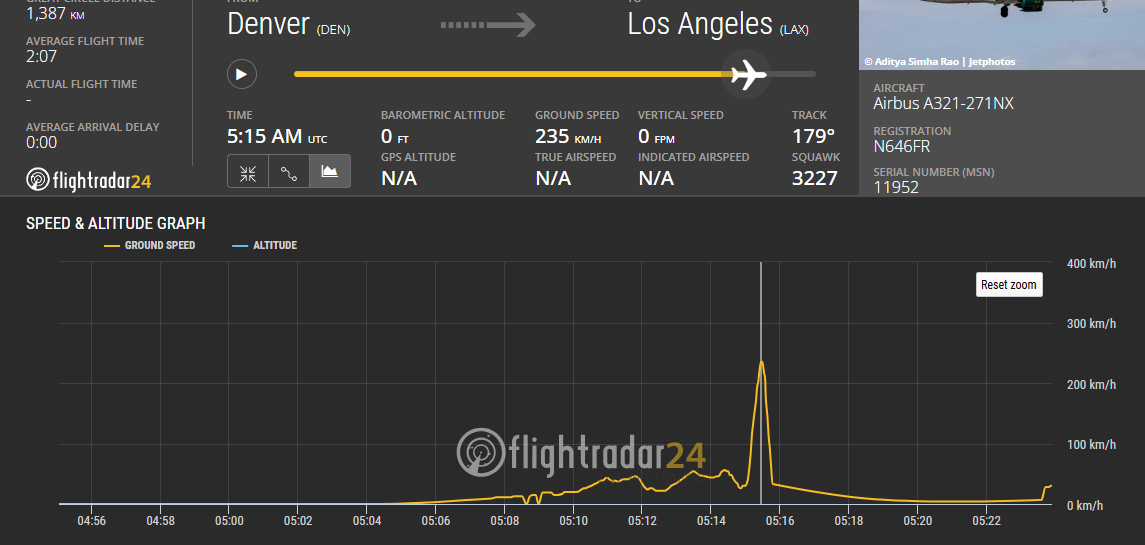
The aircraft, weighing roughly 80 tonnes including passengers, fuel, and cargo, came to a sudden stop at high speed. Under such circumstances, enormous friction builds up in the braking system, often generating enough heat to cause smoke or even tire and brake fires.
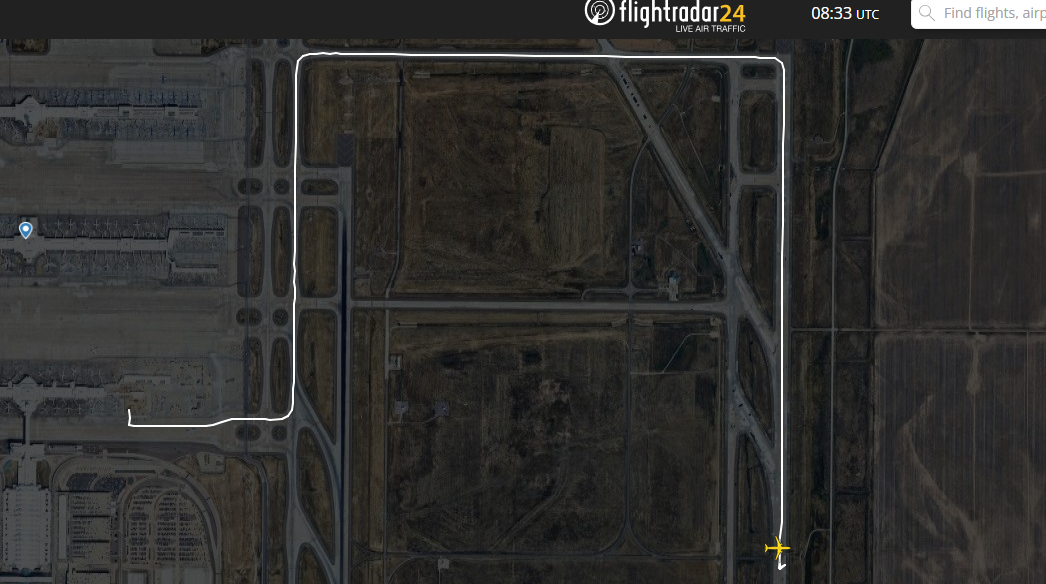
However, airport authorities and several news reports specifically stated that the fire occurred in one of the aircraft’s engines and was later extinguished.

That unusual detail raises further questions about the accident and highlights gaps in the information released so far.

How did the person reportedly struck by the aircraft gain access to the active runway area inside a major international airport? How could someone cross a runway while an aircraft was accelerating for takeoff?

Who exactly was the “pedestrian” mentioned in the reports — the individual whom the pilot reportedly told air traffic control he had seen walking across the runway?

Was the person an airport employee, a passenger, a maintenance worker, or a trespasser? So far, none of the reports have clarified this.

Now, let us return to the reported engine fire.

As noted earlier, when a large aircraft aborts takeoff at high speed, it is not unusual for the landing gear, brakes, or tires to overheat and even catch fire.

But an engine fire points toward another possible scenario — that foreign objects may have entered the engine during the incident. Such an event can disrupt airflow inside the engine and trigger a compressor stall or engine surge, often accompanied by loud bangs, smoke, sparks, and, in some cases, fire.

That raises another disturbing question: what exactly entered the engine?

It is worth noting that, apart from the pilot reportedly saying he saw someone on the runway and believed the aircraft had struck the person, there has been little mention in news reports about the individual’s condition or what ultimately happened to him.

Another important factor is the height of the Airbus A321neo’s engines above the ground. Depending on aircraft weight and tire pressure, the Pratt & Whitney PW1100G or CFM LEAP-1A engines fitted on the A321neo sit only about 80 to 120 centimeters above ground level. The engine fan diameter itself is approximately 198 to 206 centimeters.

And the average adult human height ranges between 167 and 182 centimeters.

During takeoff, the engines of an A321neo ingest 500-700 kilograms of air every second. That means, the aircraft’s two engines pull in air at a rate 10,000 times more powerful than a typical household vacuum cleaner.

Given those forces, and with the aircraft moving at 235 km/h during the rejected takeoff, one cannot help but imagine — with horror — what might happen to a person caught in front of the engines.

  • jacob@indianaviationnews.net
Share this:
Share this page via Email Share this page via Stumble Upon Share this page via Digg this Share this page via Facebook Share this page via Twitter

Two Aviation Disasters, One Dark Question Hanging Over

By Jacob K Philip

Eleven months after an Air India Boeing 787 crashed seconds after takeoff from Ahmedabad while operating a flight to London, attention has now turned to a similar tragedy in China four years ago — after a newly released US report suggested that the crash may have been deliberate.

A document released by the US National Transportation Safety Board (NTSB) says the fatal crash of a China Eastern Airlines Boeing 737-800 in March 2022 could have been caused by the deliberate shutdown of both engines in flight.

The aircraft had taken off from Kunming Changshui International Airport at 2:23 pm on March 21, 2022, bound for Guangzhou Baiyun International Airport. All 132 people on board were killed.

Search and rescue team at China Eastern Airlines crash site.

The NTSB document, released under the US Freedom of Information Act, has intensified global debate because of its striking similarities to revelations contained in the preliminary report into the recent Air India crash.

The US agency participated in the China Eastern investigation because the aircraft was US-made. According to the report, data extracted from the aircraft’s black boxes showed that both engine fuel control switches had been moved from RUN to CUTOFF while the aircraft was cruising at 29,100 feet.

“The only explanation” for the switches being moved, the NTSB noted, was that someone intentionally changed their position, as there had been no indication of any mechanical or system malfunction before the event.

Roughly an hour after departure, the aircraft suddenly entered a steep descent. In just over two minutes, it plunged from 29,100 feet to 9,075 feet before disappearing from radar near Wuzhou in southern China.

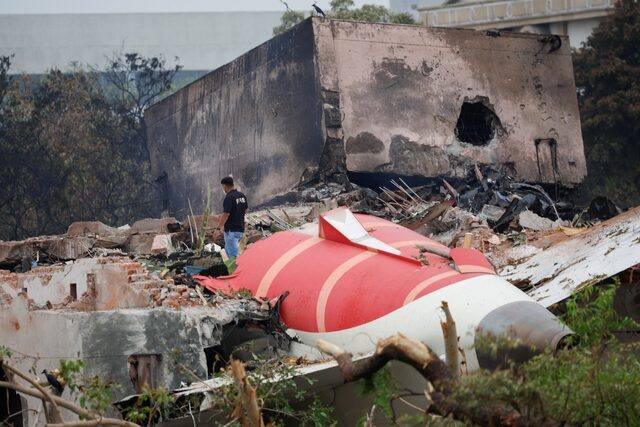
Air India crash debris

Air traffic controllers repeatedly attempted to contact the cockpit during the descent, but there was no response.

Investigators noted that the switches were never returned to the RUN position, strengthening suspicions that the act may have been intentional.

The report also casts doubt on suggestions that the aircraft simply became uncontrollable after engine failure. Aviation experts point out that even with total loss of thrust at cruising altitude, the aircraft should have been capable of gliding forward for a considerable distance and potentially making an emergency landing.

The NTSB further revealed that the flight data recorder stopped functioning as the aircraft descended through 26,000 feet after electrical power was lost. However, the cockpit voice recorder continued operating on battery power until impact.

According to the report, the cockpit voice recorder suffered catastrophic damage in the crash, and no backup copy of the audio had been created. China has also not handed the original recording to US investigators.

Investigators believe it is unlikely that the pilots intentionally shut down both engines and then immediately forced the aircraft into a near-vertical dive. One theory under consideration is that a third person may have entered the cockpit and incapacitated the crew.

The report notes that if one pilot had deliberately cut off the engines, the other would almost certainly have attempted to restart them. The absence of any restart attempt has therefore become a key focus of the investigation.

The renewed attention on the China Eastern crash comes as controversy continues over the preliminary findings into the Air India Boeing 787 disaster.

That report revealed that both fuel control switches on the Air India aircraft had also moved to the cutoff position seconds before the crash.

While several pilots’ organisations in India have called for further investigation into the possibility of electrical or battery-related failures, many aviation analysts believe the evidence increasingly points toward deliberate human action.

The Federation of Indian Pilots has nevertheless demanded a more detailed technical probe, arguing that all possible system failures must be ruled out before any conclusion is reached.

The Aircraft Accident Investigation Bureau is expected to release its final report into the Air India crash before June 12, — one year after the disaster.

-jacob@indianaviationnews.net
Share this:
Share this page via Email Share this page via Stumble Upon Share this page via Digg this Share this page via Facebook Share this page via Twitter

From routine diversion to ‘Mid-Air Horror’: How ignorance distorts aviation reporting

By Jacob K Philip

NDTV on Monday published a textbook case of how sensationalism—and a lack of basic aviation understanding—can distort a routine incident into a dramatic narrative.

This was the headline:

“4 Hours of Mid-Air Horror: Flyers Seen Praying, Crying on Fly91 Flight.”

The introduction followed suit:

Her hands joined in prayer, she sobs quietly at first. Then it escalates—tears streaming, body shaking—as she mutters a prayer. The video, the report says, captures the ‘horror’ of a Fly91 flight in bad weather, with passengers in panic for nearly four hours.

It doesn’t stop there—

Cries of “Oh my God”, punctuated with wails, could be heard on repeat in the shaky video that has emerged.

“Oh s**t…Why is he doing like this,” a man could be heard shouting, the voice relaying the panic and urgency.

“Ro mat, ro mat, kuch nahi hota, ruko (Don’t cry, don’t cry-it’s nothing. Wait),” another voice is heard saying on the video.

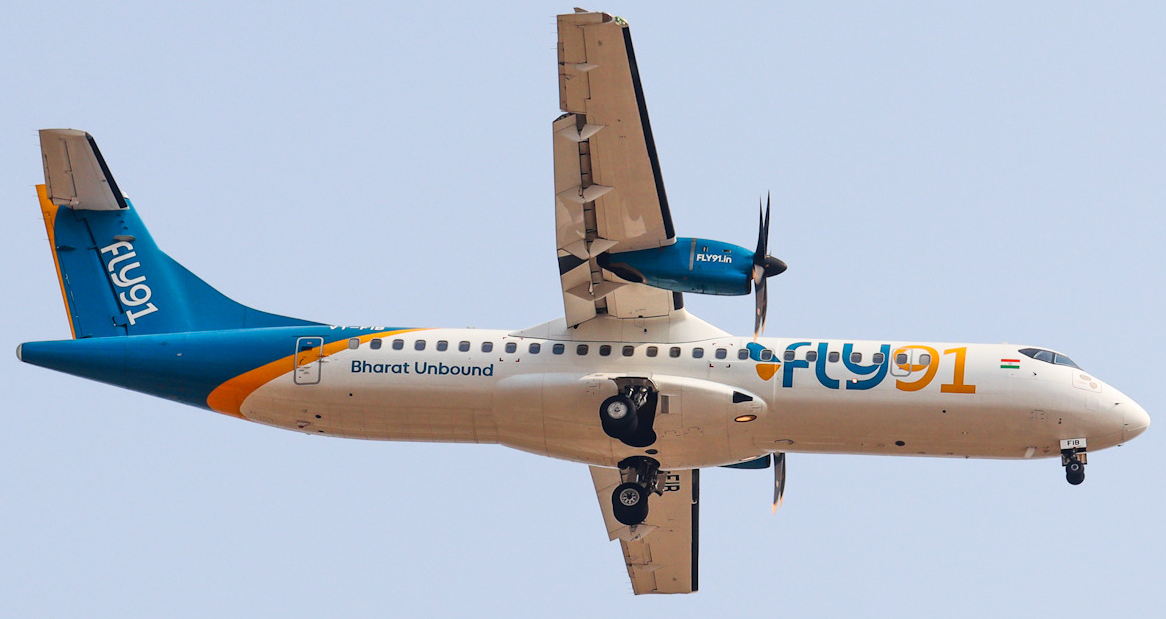
VT-FID

After building up such intense drama in the opening paragraphs, when readers continue down eagerly, this is what they would find:

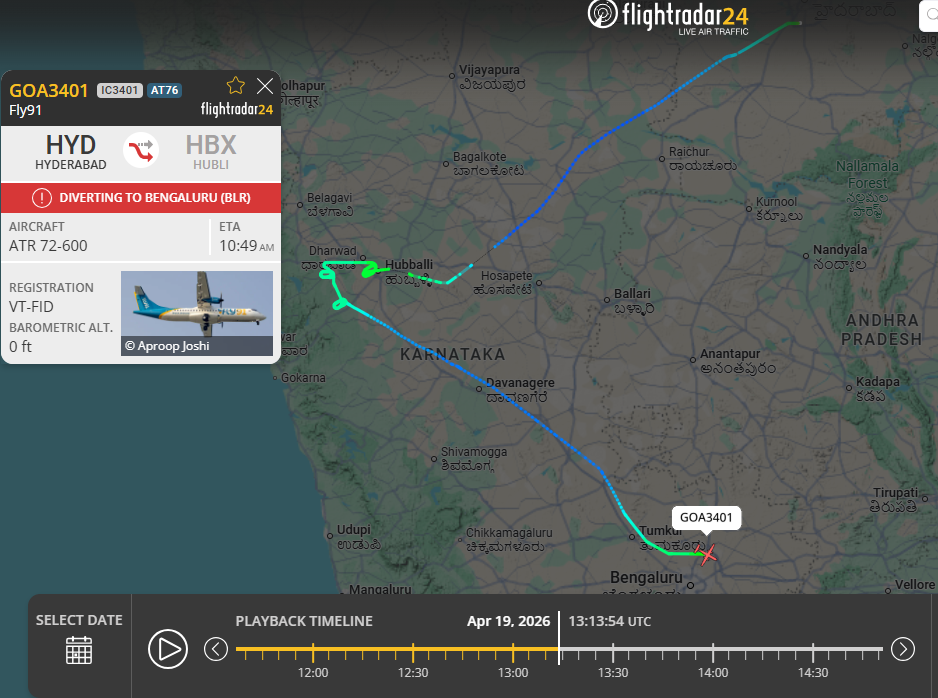
Fly91 flight IC3401, a small regional airline service, took off from Hyderabad at 3:10 PM Sunday, April 19, heading to Hubli in Karnataka. As usual, it reached over Hubli around 4:15 PM. Due to bad weather, the aircraft held at 4,000–7,000 feet for some time. When the weather didn’t improve, the decision was made to divert to Bengaluru. The flight proceeded there around 5:45 PM and landed at 6:45 PM. Later, after weather conditions improved, it departed again around 7:30 PM and finally landed at Hubli at 9:19 PM, disembarking passengers safely.

This routine event—something that happens countless times every year in India during monsoons—was portrayed as a terrifying aerial ordeal, based mainly on the panic of one distressed passenger. The reporter who did this deserves mention; the editor who added such a headline deserves even more.

The story also includes snippets of passenger conversations:

“Ask the pilot to go to Bengaluru. Or we can go to Belgaum at least,” a passenger could be heard saying.

“Yes. It is nearby,” another passenger agreed.

Amid all this unsolicited advice and arguments, the pilot did make an announcement (to be fair, it was included in the report):

“We are holding. We will keep you updated. Have patience, kindly follow instructions.”

Meanwhile, on the ground, family members of passengers were expressing anger at the airline. The report mentions allegations of poor communication, negligence, and lack of care.

And the airline had said this in a statement:

“The flight IC3401 flying from Hyderabad to Hubballi did not develop any technical snag as is being reported in some sections of the media. The flight departed from Hyderabad at 1500 hours. On nearing Hubballi, the flight encountered bad weather due to which the flight was diverted to Bengaluru as per standard protocol. The flight subsequently returned to Hubballi and back to its home base in Hyderabad.”

Turning an ordinary weather diversion into a sensational news could be partly due to preconceived notions too-

Fly91 operates the ATR-72-600, a small turboprop aircraft with a maximum capacity of about 78 passengers. Some people may feel uneasy seeing such a small aircraft. And some others may feel like getting bigger, on finding themsleves in a small aircraft, so that they can even tell the pilots how to fly the plane.

In reality, the holding time between 4:15 PM and 5:45 PM over Hubli and nearby areas could have been an opportunity for passengers to enjoy the view. At 4,000–7,000 feet, one can clearly see rivers, hills, towns, houses, and even vehicles on roads below.

But how can anyone look outside with all the crying and wailing in the cabin?

Now, why did the pilots decide not to land at Hubli?

The real culprit was cumulonimbus (CB) clouds—dangerous storm clouds—present over Hubli at that time.

At 4 PM, rain clouds were already forming at about 1,500 feet. With a temperature of 35°C, such clouds can rapidly become hazardous. By 4:30 PM, thunderclouds and cumulonimbus formations intensified, descending to around 1,200 feet.

Fly91 Diversion

By 5 PM, cloud build-up was increasing further. Interestingly, it wasn’t raining yet, so passengers looking outside might not felt the weather was bad.

Visibility was around 5,000 meters, but conditions could deteriorate suddenly—rain could begin anytime, obscuring the runway completely.

Wind direction could shift abruptly across or along the runway. Also, the presence of storm clouds at around 1,500 feet along the approach path is a serious hazard.

In short, even though the conditions didn’t visibly look severe, pilots correctly assessed that the weather could turn dangerous at any moment. That is why they chose not to land and eventually diverted to Bengaluru. And it indeed was a wise decision.

  • Jacob K Philip is the Editor of Aviation India/Indian Aviation News Net. He can be reached at jacob@indianaviationnews.net
Share this:
Share this page via Email Share this page via Stumble Upon Share this page via Digg this Share this page via Facebook Share this page via Twitter

US confirms crash of $171mn ISR UAV over Arabian Gulf

By Jacob K Philip

It is now clear that the US Navy’s Northrop Grumman MQ-4C Triton—a remote-controlled intelligence, surveillance, and reconnaissance (ISR) aircraft—which went missing after issuing a distress signal during a patrol of the Strait of Hormuz, has indeed crashed.

MQ-C Triton
.

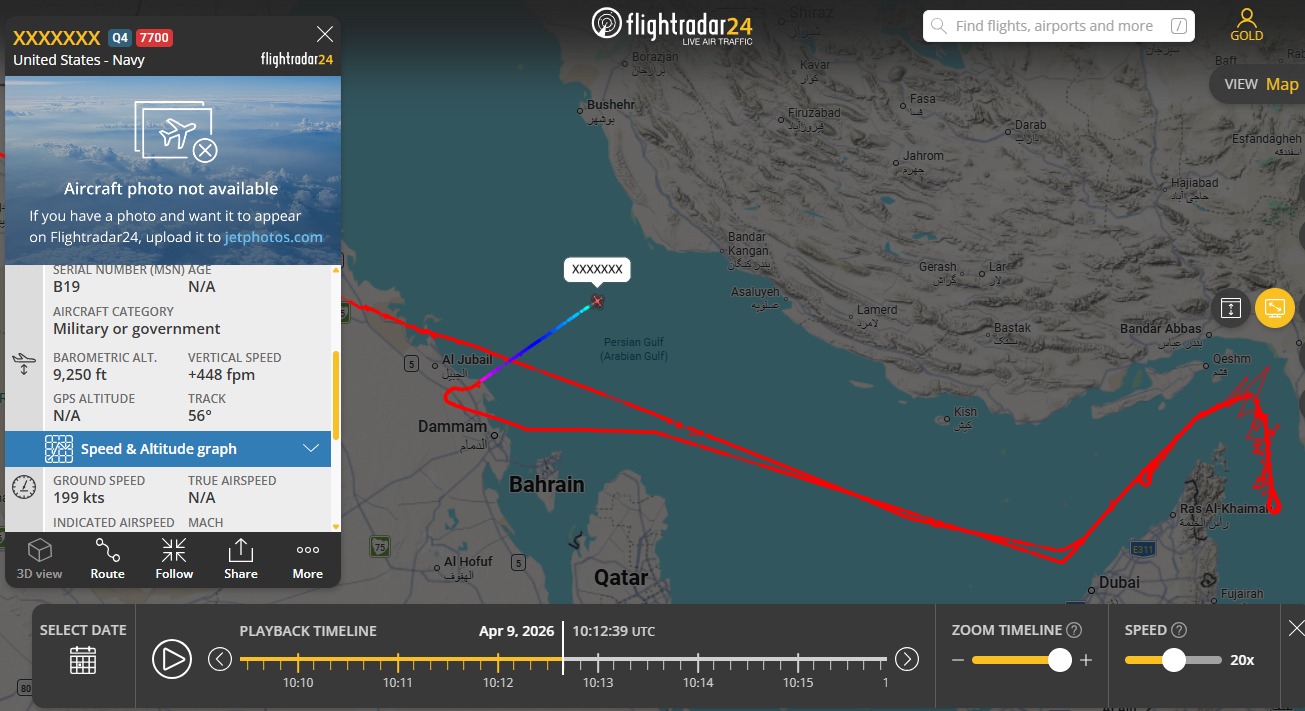
The incident occurred on the 9th of this month at 3:42 PM, while it was flying at an altitude of 9,250 feet over the Arabian Gulf between Iran and Saudi Arabia.

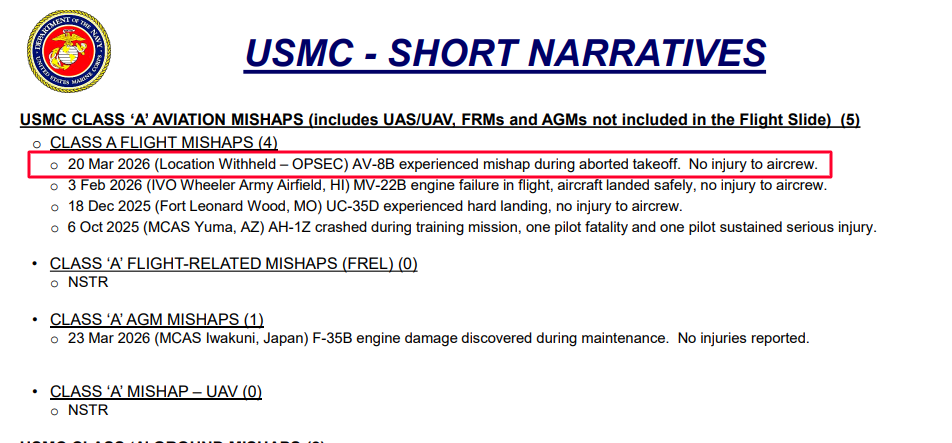
The loss of the Triton on April 9th has been recorded in the list of this year’s naval accidents on the official website of the Naval Safety Command (https://navalsafetycommand.navy.mil), the safety and security wing of the U.S. Navy. (See the screenshot of the website page).

USN Safety page
.

Although the website states that the information regarding the exact crash location is being “withheld,” it is certain that both incidents are one and the same, as it was on April 9th that the aforementioned Triton squawked 7700 (emergency code) and disappeared over the sea while flying at a low altitude. The website also clarifies that no injuries were reported in the crash of this unmanned aerial vehicle (UAV).

Notably, the accident has been categorized as a Class A mishap. This category includes accidents resulting in damages exceeding $2.5 million. The current estimated value of this aircraft is $171.7 million (approximately ₹1,604.3 crore as per current exchange rates).

With this, the aircraft with registration number 169804 becomes the first Northrop Grumman MQ-4C Triton that the United States has officially acknowledged losing in connection with the Middle East conflict.

Additionally, six days before the war began, on February 22nd, another Triton (Registration: 169600) issued a 7700 distress signal during a pre-war surveillance flight and landed at the Al Dhafra Air Base in Abu Dhabi. While it hasn’t been seen since and can be assumed to be completely out of service, there has been no official confirmation regarding that specific case yet.

Timeline of the April 9 crash:

Mission Phase: After completing its surveillance mission at altitudes between 47,000 and 52,000 feet, the drone was heading back toward Sigonella (Italy).
MQ-4C path
.
The Descent: Around 3:26 PM, while flying at 52,000 feet west of Al Ju’aymah (north of Dammam, Saudi Arabia), the aircraft suddenly began to lose altitude.

Final Maneuvers: As it descended, the aircraft performed a U-turn. It only began emitting a distress signal several minutes later, by which time it was over the sea north of Qatar. It briefly headed back toward Saudi Arabia before turning right toward the Iranian coast.

The Disappearance: It finally vanished from radar over the sea after dropping to an altitude of 9,250 feet.

  • Jacob K Philip is the Editor of Aviation India/Indian Aviation News Net. He can be reached at jacob@indianaviationnews.net
Share this:
Share this page via Email Share this page via Stumble Upon Share this page via Digg this Share this page via Facebook Share this page via Twitter