By Jacob K Philip
A Frontier Airlines plane en route from Denver, Colorado, to Los Angeles, California, struck a pedestrian on the runway at Denver International Airport Friday night, forcing the aircraft to suddenly abort takeoff, triggering a small fire and the evacuation of passengers.
The Airbus A321-271NX, an A321neo with registration N646FR, was departing from Runway 35R at 11:15 p.m. when it reportedly struck a ‘pedestrian’ crossing the runway about 30 seconds after beginning its takeoff roll.
During the takeoff run, the A321neo was approaching its decision speed — commonly known as V1 — the maximum speed at which a takeoff can still be safely aborted. The aircraft was traveling at around 235 km/h when the crew initiated a rejected takeoff.
After realizing the aircraft may have struck someone, the pilots immediately applied maximum braking and reverse thrust to stop the plane. At the time, the aircraft had 231 passengers and crew on board and was carrying about 9,525 kilograms of fuel for the 1,387-kilometer flight to Los Angeles.
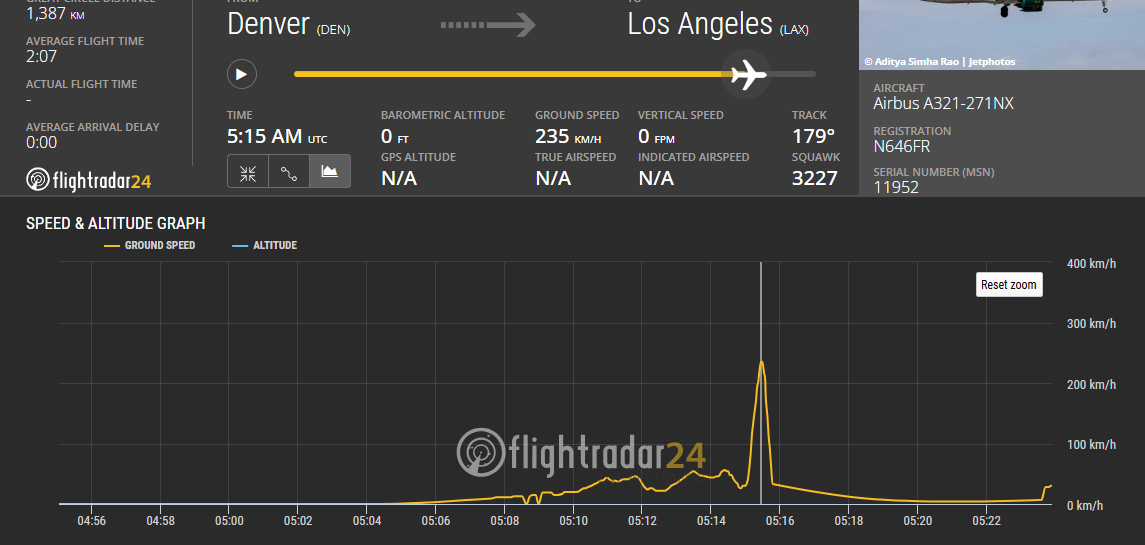
The aircraft, weighing roughly 80 tonnes including passengers, fuel, and cargo, came to a sudden stop at high speed. Under such circumstances, enormous friction builds up in the braking system, often generating enough heat to cause smoke or even tire and brake fires.
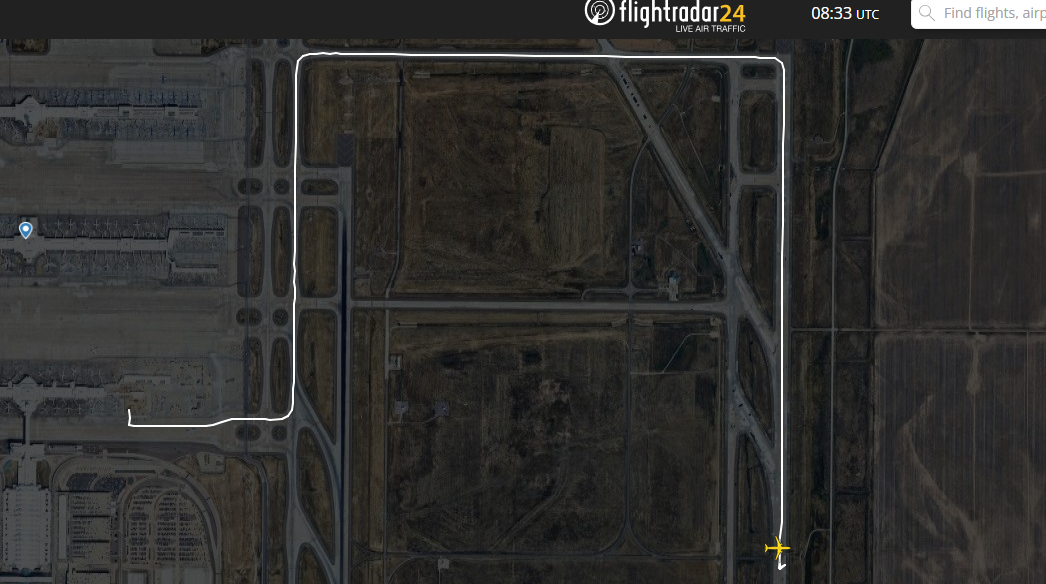
However, airport authorities and several news reports specifically stated that the fire occurred in one of the aircraft’s engines and was later extinguished.
That unusual detail raises further questions about the accident and highlights gaps in the information released so far.
How did the person reportedly struck by the aircraft gain access to the active runway area inside a major international airport? How could someone cross a runway while an aircraft was accelerating for takeoff?
Who exactly was the “pedestrian” mentioned in the reports — the individual whom the pilot reportedly told air traffic control he had seen walking across the runway?

Was the person an airport employee, a passenger, a maintenance worker, or a trespasser? So far, none of the reports have clarified this.
Now, let us return to the reported engine fire.
As noted earlier, when a large aircraft aborts takeoff at high speed, it is not unusual for the landing gear, brakes, or tires to overheat and even catch fire.
But an engine fire points toward another possible scenario — that foreign objects may have entered the engine during the incident. Such an event can disrupt airflow inside the engine and trigger a compressor stall or engine surge, often accompanied by loud bangs, smoke, sparks, and, in some cases, fire.
That raises another disturbing question: what exactly entered the engine?
It is worth noting that, apart from the pilot reportedly saying he saw someone on the runway and believed the aircraft had struck the person, there has been little mention in news reports about the individual’s condition or what ultimately happened to him.
Another important factor is the height of the Airbus A321neo’s engines above the ground. Depending on aircraft weight and tire pressure, the Pratt & Whitney PW1100G or CFM LEAP-1A engines fitted on the A321neo sit only about 80 to 120 centimeters above ground level. The engine fan diameter itself is approximately 198 to 206 centimeters.
And the average adult human height ranges between 167 and 182 centimeters.
During takeoff, the engines of an A321neo ingest 500-700 kilograms of air every second. That means, the aircraft’s two engines pull in air at a rate 10,000 times more powerful than a typical household vacuum cleaner.
Given those forces, and with the aircraft moving at 235 km/h during the rejected takeoff, one cannot help but imagine — with horror — what might happen to a person caught in front of the engines.
-
jacob@indianaviationnews.net